


When marine spare parts are really needed
In the marine sector, intervening only when a component stops working is one of the most common mistakes. The marine spare parts come into play not only in case of obvious failure: they often become necessary when less visible signs appear, but already indicative of wear, incorrect assembly or unverified compatibility.
A onboard system, a fuel line, a cooling circuit or a pumping system can continue to operate even under non-optimal conditions. This leads many operators and boaters to postpone the replacement of parts subject to deterioration, resulting in turning a simple intervention into a more extensive problem.
Understand when it is really necessary to replace a component means observing some recurring clues:
- leaks, seepage or abnormal moisture near the connections;
- starting difficulties or irregular operation of auxiliary systems;
- unusual noises, vibrations or friction not previously present;
- deformations, stiffening or signs of material aging;
- previous interventions carried out with adapted parts instead of truly compatible ones.
In many cases the problem is not the single piece, but the choice of a “similar” solution that seems suitable only at first glance. This is where the nautical technical guidescome into play: they help to correctly read dimensions, fittings, materials and intended use, avoiding repeated replacements and unplanned downtime.
Another often underestimated aspect concerns the history of the boat. Changes made over time, partial maintenance, or replacements with non-homogeneous components can alter the original configurations. For this reason, before ordering a spare part, it is always advisable to compare the installed component with the available documentation and, if necessary, delve deeper through nautical technical guides and category sheets.
The practical rule is simple: if a component shows signs of wear, if the system operates intermittently or if the installed part does not certainly correspond to the one expected, one should not reason by similarity. One must reason by technical identification.
Marine spare parts compatibility: differences between solutions, sizes and fittings
The most delicate issue in choosing marine spare parts compatibility concerns the false equivalence between visually similar components. Two parts may have comparable shapes but differ in threading, effective diameter, material, fitting orientation or application purpose. In the marine field, these differences are not minor details: they affect the sealing, durability and safety of the system.
One of the most common mistakes is relying exclusively on the external measurement. In reality, compatibility must be read on multiple levels:
- functional measurements, not just general dimensions;
- type of connection, including pitch, shape, and orientation;
- material, to be evaluated based on the usage environment;
- real application, because the same component can have different versions for different systems;
- interaction with other elements already onboard.
For example, a spare part chosen solely based on the nominal diameter may seem correct at the time of purchase but prove unsuitable during assembly. The typical result is a forced installation, an imperfect seal, or abnormal stress on fittings, pipes, or supports. In these cases, the problem does not arise from the spare part itself but from an incomplete assessment of compatibility.
To reduce the margin of error, it is useful to follow a sequential check:
- identify the precise function of the component to be replaced;
- verify the relevant measurements and not just the visible ones;
- check the type of connection and the configuration of the joint;
- compare the material with the operating environment;
- check the product sheet for any application notes or limitations.
This logic is particularly important when consulting large catalogs or cross categories. The greater the variety of available solutions, the more necessary it becomes to correctly filter the search. Useful support can also come from related content such as insights on the compatibility of nautical spare parts or sections dedicated to system components.
Nominal size and actual size are not always the same thing
In operational language, it often happens to identify a spare part by a “commercial” size or a name used in the workshop. However, the size by which a component is called does not always match the one to be checked for installation. This is precisely where many incompatibilities arise.
A correct check requires distinguishing between:
- declared size;
- useful coupling size;
- thickness or insertion depth;
- space needed for actual assembly;
- presence of seals, reducers, or adapters already installed.
If even one of these checks is missing, the risk is purchasing a theoretically correct spare part but practically unusable.
Materials and marine environment: compatibility not to be underestimated
The choice of material is often treated as a secondary detail, but in the marine environment it can make the difference between a lasting replacement and an intervention to be repeated in a short time. Humidity, salt, thermal shocks, and contact with different fluids require a careful evaluation of the usage context.
When selecting a component, it is useful to ask yourself:
- is it intended for an exposed or protected area?
- does it work with water, fuel, air, or other fluids?
- does it come into contact with different materials that may accelerate its degradation?
- is the current configuration of the system original or modified over time?
If the answer is not clear, the best choice is not to proceed by approximation and check the product sheet all available information.
Mistakes to avoid when choosing or installing marine spare parts
Among the recurring problems in the world of marine spare parts, some occur with surprising frequency even in professional contexts. They do not always depend on the quality of the component: very often they derive from a rushed selection phase or from installation carried out without preliminary checks.
Here are the most common mistakes to avoid.
Choosing the spare part based solely on visual similarity
This is probably the most common mistake. A component may look identical to the original but differ in details that directly affect functionality. Connections, coupling dimensions, orientation, or materials can change even when the overall appearance is very similar.
The solution is simple only in theory: never compare a spare part just “by eye,” but always start from codes, correctly measured dimensions, and application function.
Neglecting the system context
A correct spare part on a standard system may not be so on a system modified over time. Many boats have undergone adaptations, partial replacements, or subsequent integrations. This means that the component installed today may not correspond to the original configuration.
Before proceeding, it is advisable to check the entire affected section: fittings, supports, pipes, gaskets, and connected accessories. An isolated reading of only the part to be replaced often leads to compatibility errors.
Installing without checking surfaces, seats, and seals
Even the correct spare part can perform poorly if installed on a damaged seat or on unclean surfaces. Residues, deformations, irregular tightening, or worn accessory components compromise the final result.
Before assembly, it is good practice to check:
- cleaning of contact surfaces;
- integrity of seats and housings;
- presence of sealing elements still suitable;
- absence of mechanical stress due to misalignments;
- correct positioning of connections.
Many problems attributed to replacement actually arise from installation on a non-compliant base.
Forcing unnecessary adaptations
When a component does not fit correctly or requires improvised modifications, there is only one signal to catch: most likely compatibility has not been sufficiently verified. Forcing an assembly to “make it work” exposes to leaks, premature wear, and future maintenance difficulties.
In these cases, it is preferable to stop, double-check the data, and consult a support resource such as technical datasheets and in-depth articles, instead of proceeding with temporary solutions that then become definitive.
Ignoring the signals after replacement
A less obvious but equally common mistake is to consider the intervention complete immediately after assembly. In reality, the next phase is fundamental: observing the system’s behavior, checking for any leaks, unusual noises, or operational irregularities allows you to immediately detect an installation or residual compatibility problem.
A post-intervention check reduces the risk of indirect damage and helps confirm that the replacement works under the expected conditions.
Products and categories to consider for a more technically correct choice
When searching for marine spare parts with a technical approach, the point is not to find “the part that looks most similar,” but to identify the correct category in which to make the selection. This step is decisive because it allows you to compare homogeneous solutions and read compatibility more precisely.
Technical categories, if well consulted, help narrow down the field based on the component’s function, the type of system, and the mounting context. It is a more reliable method than generic searching, especially when working on systems where multiple elements collaborate.
To better orient yourself, it can be useful to explore reference pages such as components for nautical systems, collections of nautical technical guides, or sections dedicated to the most requested spare part families. The goal is not to multiply options, but to reduce selection errors.
A professional approach to choice almost always involves these questions:
- am I looking for a direct replacement part or a solution for a modified system?
- is the consulted category consistent with the component’s actual function?
- am I checking only the shape or also the mounting compatibility?
- are there accessories or complementary parts that need to be checked together?
At this stage it is useful to avoid another typical mistake: focusing on the single component without considering the system in which it works. In boating, many recurring anomalies arise from interactions between different parts. A correct replacement, inserted into a worn or non-homogeneous assembly, may not solve the root problem.
For this reason, when analyzing categories and subcategories, it is advisable to carefully read descriptions, applications, and available technical notes. If information is not explicit, the safest choice remains the same: check the product sheet.
Recommended products

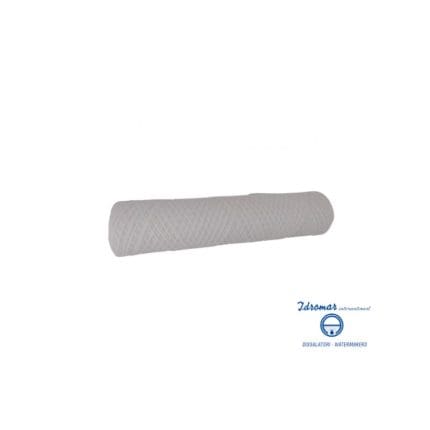 10" Wound Wire Cartridge 20 micron – code: 10MP20 – Idromar
 Stainless steel clamps Norma 12–22 mm – code: FAI0012022 – Toscogomma
 Brush with spring - code: SGM45 - Gianneschi Pumps and Blowers


How to avoid recurring problems with a simple verification method
Prevention, in the field of marine replacements, does not depend on shortcuts but on a method. Even a quick check, if performed systematically, helps avoid most of the most costly errors in terms of time and repeated interventions.
An effective verification flow can be summarized as follows:
- identify the component and its function in the system;
- detect the correct measurements without relying on generic names;
- check fittings and materials in relation to the onboard environment;
- assess the condition of connected parts, not just the spare part to be replaced;
- compare the available data with description and product sheet;
- verify behavior after installation.
This approach is useful both for those who manage frequent maintenance and for those who intervene occasionally but want to avoid wrong purchases. The nautical technical guides are exactly for this: to turn an apparently simple choice into a more informed decision, based on real compatibility and not on superficial similarities.
If you are looking for a solution suitable for your system, explore the relevant category or brand and always compare the available technical details before purchasing: it is the most effective way to reduce errors, returns, and ineffective replacements.
FAQ
How to understand if a marine spare part is truly compatible?
Compatibility should not be assessed solely by shape or external size. It is important to check the component's function, fittings, useful measurements, material, and installation context. If any information is unclear, check the product sheet.
Can I replace a nautical component with a similar one if it looks the same?
It is not recommended. Two seemingly identical components may differ in connections, mounting dimensions, or material. In the nautical field, these differences can cause leaks, premature wear, or forced assemblies.
What is the most common mistake in choosing marine spare parts?
The most frequent mistake is choosing the spare part based solely on visual similarity. Another recurring problem is ignoring modifications made over time to the system, which can make a theoretically correct replacement unsuitable.
Why can a correct replacement still cause problems after installation?
Even a compatible replacement can malfunction if installed on damaged surfaces, unclean seats, or already worn connected components. After replacement, it is always useful to check the sealing, alignment, and system behavior.
Do nautical technical guides really help to avoid mistakes?
Yes. Nautical technical guides are useful because they help correctly read measurements, fittings, materials, and applications. They are particularly useful when comparing multiple solutions or when the system is no longer in its original configuration.


