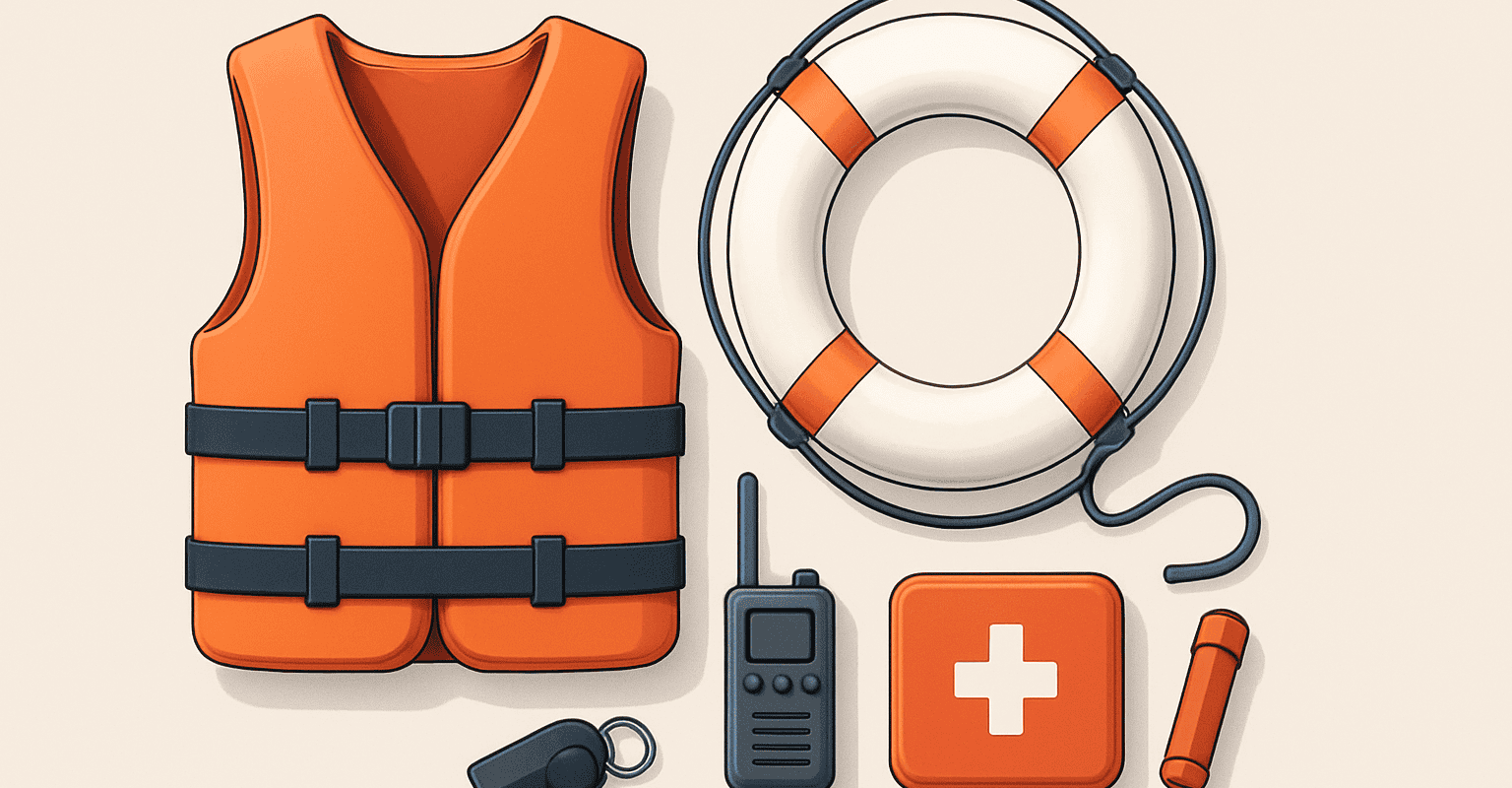
When you really need a nautical safety kit
Talking about nautical safety kit correctly means going beyond the idea of a simple “ready-to-use” purchase. In the nautical field, in fact, the choice of a kit does not depend only on the desire to have an orderly equipment on board, but above all on the compatibility with the boat, with the intended use and with the accessories already present. This is where many superficial guides stop, while a technical evaluation starts from very concrete questions.
The first point is to understand in which context the kit will be used. One thing is to equip a small unit for occasional outings, another is to organize a boat that undertakes more frequent navigation, with a variable crew and limited storage space. In both cases, the kit must be consistent with the actual configuration on board: compartment layout, ease of access, presence of dedicated supports, fastening methods and compatibility with the equipment already installed.
Many users look for complete solutions thinking to simplify the choice. It is an understandable logic, but not always sufficient. A well-thought-out kit must be easy to integrate, not just easy to buy. If some components are bulky, difficult to place or not suitable for the boat’s layout, the risk is to end up with equipment that is formally present but not practical to use when it really matters.
For this reason, the best nautical technical guides insistono su un principio semplice: prima si valuta il contesto, poi si seleziona il kit. La scelta corretta nasce dall’incrocio tra spazio disponibile, tipo di navigazione, abitudini dell’equipaggio e accessori installati. Se hai bisogno di approfondire la logica di allestimento a bordo, può essere utile consultare anche guide tecniche nautiche dedicate alla gestione degli spazi e delle dotazioni.
Another often underestimated aspect concerns the speed of access. A kit placed in a locker that is difficult to open or behind other equipment loses much of its practical usefulness. When choosing, it is therefore advisable to ask yourself:
- does the container really fit in the available space;
- is the opening easy even in non-ideal conditions;
- can the components be quickly retrieved;
- does the positioning remain stable during the use of the boat;
- is the set compatible with other on-board accessories.
This approach avoids one of the most common mistakes: buying a kit based solely on the perception of completeness, without checking if it is really suitable for your vessel. From a comparative perspective, the winning solution is not the one with more elements “on paper”, but the one that integrates better into the real on-board routine.
Nautical safety kit compatibility: differences between solutions, sizes and configurations
The theme of nautical safety kit compatibility It is central because two seemingly similar solutions can behave very differently once installed or stowed on board. The differences concern not only the content but also the format, size, internal organization, container materials, and usage methods.
A first useful distinction is between kits designed to maximize compactness and kits that prioritize ease of organization. The former are interesting when space is limited, but they must be checked carefully: an overly compressed structure can make retrieving individual items less immediate. The latter, on the other hand, often prove easier to manage but require adequate storage volumes. The correct choice always depends on the relationship between available space and accessibility.
Measurements matter, but it is not enough to read a generic dimension. You must also consider:
- container shape, because an irregular compartment may poorly accommodate a rigid kit;
- type of closure, which affects quick opening;
- presence of handles or grip systems, useful in tight spaces;
- resistance of the external material, especially if the kit is placed in areas exposed to moisture or abrasion;
- internal modularity, important for maintaining order and visual control.
In a technical comparison, compatibility must be read on two levels. The first is physical compatibility: the kit fits, attaches well, does not hinder other operations, and does not suffer damage during normal use of the boat. The second is functional compatibility: the kit is consistent with the number of people on board, the frequency of use, and the general logic of the equipment.
A practical example: a very compact solution may seem ideal on a small boat, but if it requires emptying half a locker to retrieve it, the functional compatibility is weak. Conversely, a slightly more structured kit but placed in an accessible spot can prove more effective in daily practice.
For those comparing multiple options, it is useful to always check in the product sheet:
- external dimensions of the container;
- recommended storage methods;
- any fixing or support systems;
- materials and characteristics of the container;
- intended use declared by the manufacturer.
Questa lettura tecnica riduce il rischio di acquisti impulsivi e aiuta a distinguere tra kit “comodi da vedere online” e kit davvero adatti alla propria barca. Se stai valutando anche altri accessori di bordo collegati alla sicurezza e alla gestione degli spazi, può essere utile consultare soluzioni per l’equipaggiamento nautico e confrontare approcci diversi.
Mistakes to avoid when choosing or installing the nautical safety kit
The most common mistakes almost never arise from a lack of supply, but from a incomplete compatibility assessment. The typical problem is choosing the kit based on the impression of completeness or the shape of the container, neglecting how it will actually be managed onboard.
Choosing without measuring the available compartment
This is one of the most common mistakes. It is assumed that a standard kit can easily fit into any locker, but in practice just a few poorly managed centimeters can make installation uncomfortable. Width is not the only factor: depth, usable height, lid opening, and the presence of hinges, pipes, or other obstacles must be considered. If the data is unclear, check the product sheet.
Ignoring the type of emergency access
A kit placed in a hard-to-reach area is a weak choice, even if it seems tidy on paper. During installation or stowage, the real use must be simulated: is the container easy to grab? Does it open without moving other materials? Is it still visible when the compartment is full? These questions are more important than they seem.
Neglecting compatibility with already present accessories
Su molte imbarcazioni lo spazio di bordo è già occupato da cime, dotazioni tecniche, strumenti, accessori per l’ormeggio o attrezzature stagionali. Inserire un kit senza ripensare l’insieme porta spesso a soluzioni improvvisate. Il risultato è un contenitore spostato di continuo, esposto a urti o collocato in aree poco adatte. Per una gestione più razionale può essere utile confrontare anche accessori e componenti per la barca che aiutano a organizzare meglio i vani.
Confusing compactness with practicality
A smaller size is not automatically better. In some cases, extreme compactness penalizes content readability and makes use less intuitive. Practicality arises from the balance between bulk, accessibility, and internal order.
Mounting or fixing without evaluating the support
When the kit requires or involves stable positioning, the fixing point must be consistent with the available surface. Materials, wall curvature, vibrations, and humidity can affect hold. If the installation system is not specified, check the product sheet and check that the chosen support is suitable for your boat’s structure.
Not updating the configuration over time
The boat changes: accessories are added, use is modified, compartments are reorganized. A kit that initially seemed perfect can become inconvenient after a season. The nautical technical guides most useful do not treat the choice as a one-time event but as part of onboard setup maintenance. It is worth periodically reviewing placement, accessibility, and the general condition of the container.
Products and categories to consider for a more technical choice
When analyzing a nautical safety kit with a comparative approach, it is advisable to look not only at the kit itself, but also at the related categories that influence its effectiveness on board. This approach is typical of the best technical guides: safety is not isolated, but integrated into a system made of storage, access, protection, and order.
The first category to consider is that of onboard organization systems. Vani, contenitori, supporti e soluzioni di fissaggio incidono direttamente sulla fruibilità del kit. Anche il miglior contenuto perde valore se viene sistemato in modo instabile o poco accessibile. In questo senso può essere utile approfondire accessori per l’organizzazione a bordo che aiutano a mantenere ogni dotazione al posto giusto.
A second area concerns materials and protections. If the kit is placed in areas subject to humidity, splashes, or contact with other equipment, the container must be consistent with that environment. There is no need to look for absolute formulas: it is necessary to understand if the chosen solution is suitable for the spot where it will actually be positioned. Here too, comparing categories helps more than purely aesthetic comparison.
Also not to be underestimated is the relationship with other safety and onboard management elements. Un kit ben inserito funziona meglio quando il resto dell’equipaggiamento è organizzato in modo logico. Se, ad esempio, cime, accessori di coperta e dotazioni varie sono distribuiti senza criterio, anche il recupero del kit diventa meno immediato. Per una visione d’insieme può essere utile consultare componenti nautici per l’allestimento tecnico e valutare come ottimizzare l’intero assetto.
In a competitor-driven logic, the real distinctive element is not only “what is in the kit,” but how well the kit works together with the rest of the boat. This is the point that often separates a correct choice from a purchase that is only apparently convenient.
Before deciding, do a quick check on these aspects:
- actual space available at the storage point;
- ease of access with the boat in motion or with a partially occupied compartment;
- compatibility of the container with humidity and contact with other equipment;
- possible need for supports or fastenings;
- consistency with the overall organization of the onboard area.
This method helps to choose more clearly and avoid the classic mistake of evaluating the kit as an element separate from the context. In reality, its effectiveness almost always depends on integration with everything else.
Recommended products

 Stainless steel clamps Norma 12–22 mm – code: FAI0012022 – Toscogomma
 Brush with spring - code: SGM45 - Gianneschi Pumps and Blowers


How to really compare two marine safety kits without stopping at the datasheet
When two solutions seem equivalent, the comparison must shift from the declared content to the practical management on board. This is where real differences emerge. A kit may seem tidier online, but turn out to be less suitable once placed in a tight locker or in a compartment with an awkward opening.
To make a useful comparison, try to think in sequence:
- Identify the placement point before purchase.
- Measure the compartment also considering opening and grip.
- Evaluate the context: humidity, shocks, presence of other equipment.
- Check the product sheet to check dimensions, materials, and usage methods.
- Compare practicality, not just perceived completeness.
This approach reduces compatibility errors and makes the choice much more consistent with actual use. In other words, the best nautical safety kit compatibility is not the one that promises the most, but the one that fits best into your onboard configuration.
If you are evaluating the most suitable solution for your boat, explore the available selection among categories and brands in the catalog: comparing formats, storage systems, and related accessories is the most effective way to choose a kit truly compatible with your setup.
FAQ
How to check the compatibility of a marine safety kit with my boat?
First check the actual stacking or fastening point, then compare the size, shape of the container, opening, and materials. If some data is unclear, check the product sheet.
Is a compact marine safety kit better or a more organized one?
It depends on the available space and ease of access. A very compact kit may take up less space, but it is not always the most practical to retrieve quickly on board.
What is the most common mistake when choosing a marine safety kit?
Choosing based solely on the impression of completeness without evaluating compatibility with lockers, accessibility, presence of other accessories, and usage methods on the boat.
Can I compare two marine safety kits only from the online sheet?
The datasheet is a good starting point, but the best comparison comes from crossing product data with the boat's real configuration. Measurements, opening, and placement often make the difference.
When is it advisable to review the position of the onboard kit?
Every time the boat's organization changes, accessories are added, or the boat's use is modified. A well-chosen kit can become less practical if the onboard context changes.