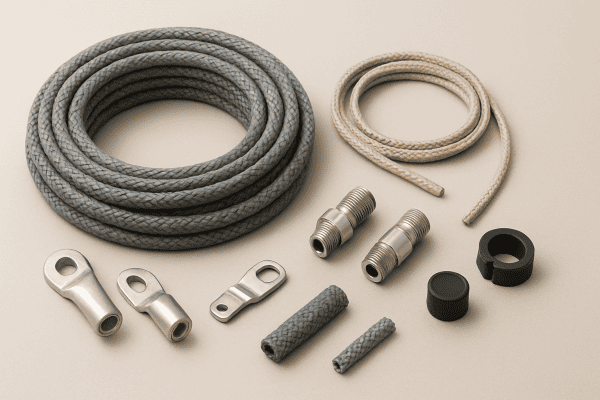
When Osculati nautical is really needed
In daily work on board, choosing components and accessories without a technical criterion often leads to wasted time, avoidable returns, and installations that are not consistent with the existing system. This is where the topic osculati nautical becomes central: not just as a simple brand search, but as a reference for those who want to compare solutions designed for real marine contexts, with attention to installation, integration, and continuity of use.
In practice, this choice becomes relevant when you need to:
- replace a worn element without changing the system setup;
- integrate accessories on an already equipped boat;
- evaluate mechanical or functional compatibility between different parts;
- reduce the margin of error before ordering;
- navigate between multiple families of items with similar functions.
Those looking for nautical technical guides usually does not want a generic overview: they want to understand if a solution is suitable for their case. For this reason, the comparison should be set starting from three simple questions: where the component will be installed, which elements it will have to interact with, and what physical constraints are already present on board.
A practical example: two items may seem equivalent for intended use, but differ in size, interface, perceived material, or fixing logic. If your goal is a quick replacement, the continuity with the existing installation often matters more than the declared function alone. In these cases, it is advisable to compare technical sheets, images, and application notes in advance; if a detail is unclear, check the product sheet.
To deepen the selection method between accessories and spare parts intended for the marine environment, it can be useful to also consult technical guides for onboard systems, insights on the choice of nautical components, and practical advice for maintenance and replacement.
Differences between Osculati nautical solutions, measurements or compatibility
The most delicate point in searches related to osculati nautical compatibility is not finding a “similar” item, but understanding if it is really consistent with the installation context. Compatibility, in fact, does not concern a single aspect: it is a set of factors that must be read together.
Dimensional compatibility
The first check always concerns measurements, center distances, diameters, depths, and sizes. Even an apparently minimal variation can make it necessary to adapt supports, holes, or passages already present. In a light refit or a quick replacement, this detail makes the difference between direct mounting and corrective intervention.
Before ordering check:
- available space in the installation area;
- mounting points and their position;
- component orientation;
- any nearby obstacles, such as bulkheads, ducts, or other accessories;
- need for future access for maintenance or disassembly.
Functional compatibility
Two solutions can share the same intended use but be designed for different applications. One may prioritize ease of integration, another modularity, and yet another simplicity of replacement. During comparison, it is useful to ask not only “does it do what I need?”, but also “does it fit well into my onboard workflow?”.
This approach is particularly useful when the component must interact with other already installed elements. If the intended use is frequent, it is advisable to also consider accessibility, ergonomics, and ease of intervention. If instead the installation takes place in confined technical spaces, priority often shifts to managing space constraints and simplicity of connection.
Compatibility with the existing system
Many errors arise from isolated comparison of a single item, without observing the whole. In the nautical field, however, an accessory never really works alone. It must be considered in relation to supports, lines, passages, terminals, fastenings, and usage conditions. For this reason, a good analysis of osculati nautical compatibility should include:
- the type of installation already present;
- materials with which the new component will come into contact;
- method of replacing the previous part;
- presence of adapters or intermediate fittings;
- access constraints during assembly.
If you are comparing multiple alternatives, create an essential checklist and evaluate each option with the same criteria. It is a simple method, but very effective to avoid orders based solely on appearance or visual similarity.
Technical comparison: when two solutions seem the same but are not
In the nautical catalog, it is common to find items that, at a quick glance, seem interchangeable. In reality, they can differ in decisive details: fastening system, geometry, interface with other components, mounting configuration, or more specific intended use. The advice is to avoid “at a glance” comparison and always use at least a minimal technical reading.
A good criterion is this:
- first compare the real function;
- then check the physical compatibility;
- finally verify if the installation requires additional elements.
If any of these steps remain uncertain, check the product sheet. It is better to pause a minute longer before ordering than to have to correct the installation afterward.
Mistakes to avoid in choice or assembly
In the nautical sector, the most common errors are not only due to haste but to a wrong approach to comparison. Here are the cases that occur most often when selecting components or accessories.
Relying only on the photo
The image helps to orient yourself, but it is not enough to confirm a technical choice. Proportions, attachments, and construction details can be perceived misleadingly. The photo should always be read together with the description and available data. If the doubt concerns dimensions or compatibility, check the product sheet.
Ignoring the mounting context
An article that is correct in theory can become problematic in practice if the workspace is limited or if the installation area requires a precise orientation. Before purchasing, observe the mounting point as an installer would: is there space to fix, connect, and in the future disassemble? If the answer is not clear, stop and double-check.
Confusing compatible replacement with adaptation
An alternative solution is not always a direct replacement. Sometimes installation is possible, but requires modifications, intermediate accessories, or a layout revision. This does not mean the choice is wrong, but that it must be planned as adaptation and not as a simple replacement.
Neglecting the assembly sequence
In some cases, the problem is not the component itself, but the order in which it must be installed. If assembly requires the prior passage of cables, pipes, or fastening elements, an early check avoids having to disassemble everything twice. This is an aspect often underestimated in online searches, but very concrete on board.
Not considering maintenance and accessibility
An apparently correct choice can become inconvenient if it makes inspection or subsequent maintenance difficult. In the nautical technical guides most useful, this point is always present: do not evaluate only the initial installation, but also what will happen after weeks or seasons of use.
For those comparing multiple options during the purchase phase, it can be useful to also read how to check compatibility before ordering and selection criteria for nautical accessories to be replaced.
Products and categories to consider
When talking about osculati nautical, the most common mistake is to look for an isolated solution without considering the category it belongs to. In reality, thinking in terms of usage families helps much more to identify the correct article and understand which checks to make before ordering.
The categories to observe more carefully are those that affect:
- fastening and installation;
- connection with other onboard elements;
- management of technical spaces or exposed areas;
- integration with existing systems;
- completion accessories necessary for assembly.
This approach is especially useful when the catalog offers multiple variants with similar functions. Instead of starting from the single article, it is better to start from the application logic: do you need a direct replacement, an integration on an existing system, or an upgrade of the setup? The answer changes how the technical sheet should be read.
How to read a category from a technical perspective
A well-analyzed category already tells you a lot, even before comparing individual references. Observe:
- general intended use;
- available mounting variants;
- presence of complementary accessories;
- consistency with your installation environment;
- possible differences between standard solutions and more specific configurations.
If you are working on an already configured boat, this preliminary reading reduces the risk of choosing an item that is correct only in theory. A category should therefore be used as a technical orientation tool, not just as a list to browse.
When it makes sense to compare brands, range, and compatibility
A competitor-driven comparison makes sense when you want to understand not only what solution exists but which is best suited to your onboard scenario. In this type of analysis, the brand value emerges especially in the clarity of the range, the ease of comparison between variants, and the ability to precisely verify application compatibility.
For this reason, in searches on osculati nautical compatibility, it is useful not to stop at the short description. Always try to understand if the catalog structure allows you to easily distinguish between similar options and if the available information is sufficient for an informed choice. Where doubt remains, the correct reference is always the product datasheet.
Recommended products

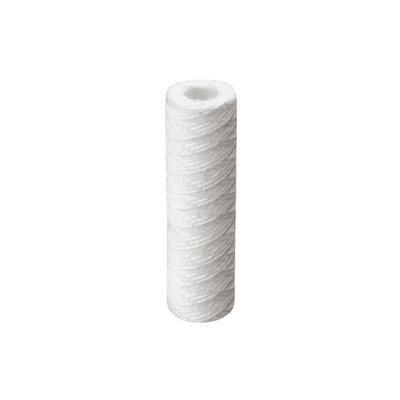
 10" Wound Wire Cartridge 20 micron – code: 10MP20 – Idromar
 Brush with spring - code: SGM45 - Gianneschi Pumps and Blowers
 Stainless steel clamps Norma 12–22 mm – code: FAI0012022 – Toscogomma


Useful links to choose better before ordering
If you are considering a replacement, an integration, or a comparison between multiple solutions, it can be useful to also consult other nautical technical guides. A well-constructed reading path helps to verify measurements, compatibility, and assembly logic before proceeding with the purchase.
Before ordering, always check the real onboard context
The correct choice does not come from a generic description but from the meeting of function, compatibility, and actual installation. If you are looking for Osculati world solutions for your setup or for a technical replacement, explore the reference category or brand and carefully compare the product datasheets: it is the most effective way to order with greater confidence and reduce errors during assembly.
FAQ
How to check Osculati nautical compatibility before ordering?
Always check measurements, fixing points, dimensions, mounting orientation, and interaction with the existing system. If a detail is unclear, check the product sheet.
When is a replacement in the nautical field really direct?
A replacement is direct when the new component is consistent with the function, size, fittings, and installation methods of the existing element, without requiring adaptations or intermediate accessories.
Why two similar nautical solutions may not be interchangeable?
Because they can change geometry, fastening system, size, mounting configuration, or compatibility with other edge elements. Visual similarity is not enough to confirm interchangeability.
What mistakes to avoid when choosing nautical accessories and components?
The most common mistakes are relying solely on the photo, ignoring the actual mounting space, not considering the installation sequence, and confusing a compatible replacement with an adaptation.
Do nautical technical guides really help in selection?
Yes, especially when they explain how to read compatibility, measurements, assembly logic, and interaction with the existing system. They are useful for reducing errors before ordering.