


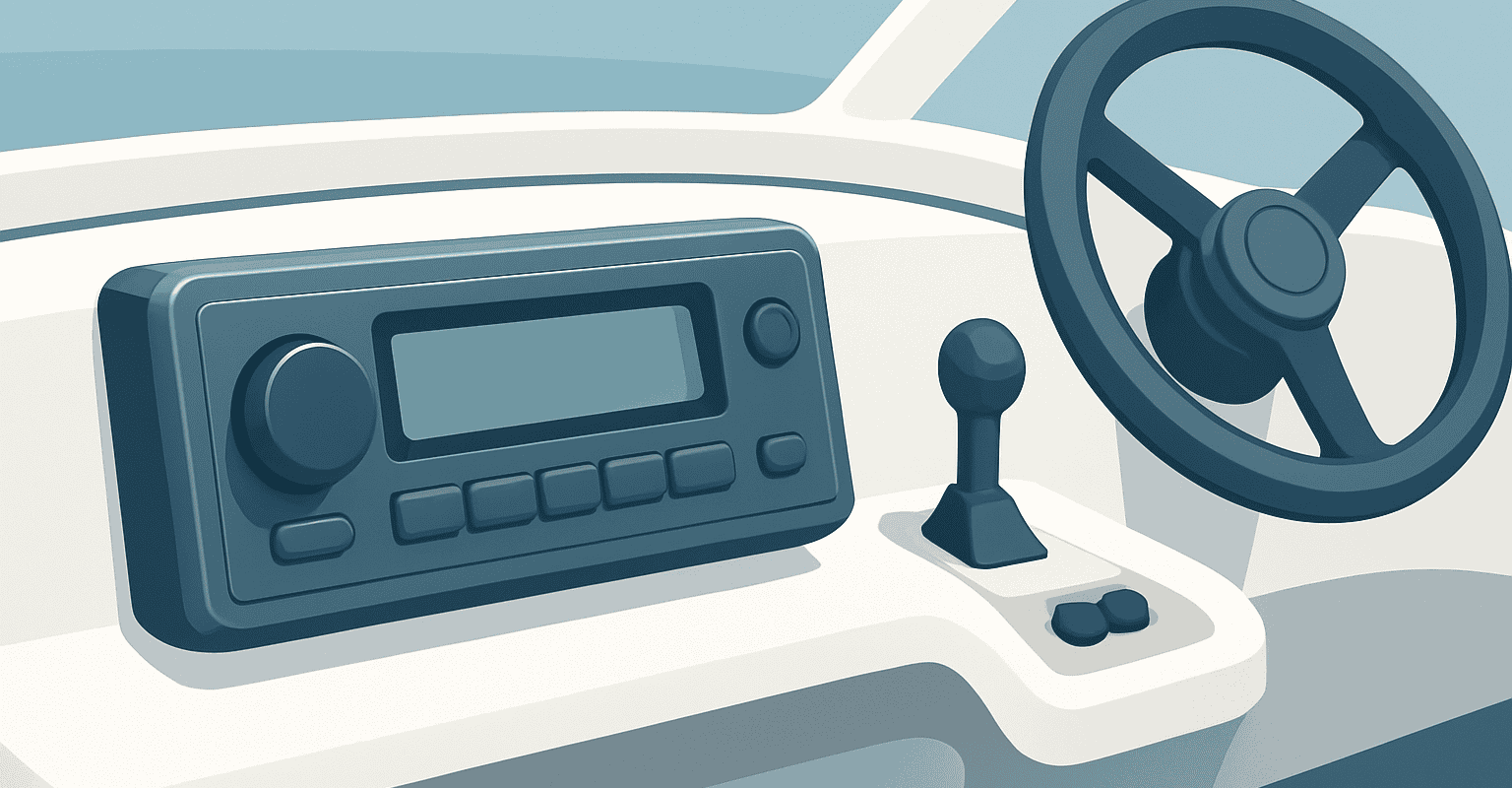
When you really need a boat stereo
Talking about boat stereo does not just mean choosing an accessory for onboard entertainment. In the nautical field, the audio system often comes into play when small signs start to appear that, if underestimated, can turn into more annoying problems: intermittent audio, unresponsive controls, leaks in the installation area, unstable connections or difficulties integrating with other onboard devices.
In many situations, it is not necessary to replace everything immediately. Before intervening, it is advisable to understand whether the problem concerns the main unit, wiring, power supply or compatibility with already present components. This is where the nautical technical guides become useful: they help to correctly interpret the symptoms, avoiding impulsive purchases or installations that are inconsistent with the existing system.
A stereo installed on a boat works in a very different context compared to a system intended for indoor environments or land vehicles. Humidity, salt spray, vibrations, sun exposure and often limited mounting spaces require more careful checks. If the audio loses quality after periods of inactivity, if the buttons show abnormal wear or if the panel shows signs of oxidation, it is time to carry out a complete check.
Another common case concerns boats bought used or already equipped. In these situations, it happens to find components assembled at different times, with connection standards not always homogeneous. The result is a system that only partially works, or that creates problems when attempting an upgrade. Before adding new elements, it is essential to evaluate the boat stereo compatibility with the existing system.
To deepen the organization of onboard electronics, it can be useful to consult dedicated nautical technical guides for onboard systems, in order to better frame the role of audio within the overall system.
Signals not to ignore during checks
There are symptoms that deserve immediate attention, even when the stereo still seems to work:
- irregular power on or sudden shutdowns;
- unstable volume without user intervention;
- hissing or distortion that appear with the movement of the boat;
- traces of moisture near the connections;
- stuck controls or unresponsive;
- intermittent wireless connections, if provided by the configuration.
These signals do not always indicate a stereo malfunction. Often the problem arises from outdated installations, unprotected cable passages, or unreliable connections. Periodic visual and functional checks help distinguish between simple maintenance and the real need for replacement.
Boat stereo compatibility: differences between solutions, sizes, and integration
One of the most common mistakes is to consider all marine audio systems equivalent. In reality, the correct choice depends on installation measurements, type of dashboard, available wiring, present interfaces, and onboard usage modes. The boat stereo compatibility does not only concern the size of the main unit but also the interaction with power supply, speakers, any remote controls, and already installed accessories.
When considering a replacement, at least four aspects must be observed:
- compartment dimensions and usable space behind the panel;
- type of connectors present in the system;
- condition of the wiring and quality of existing joints;
- functional compatibility with other onboard devices.
An apparently suitable unit may require unforeseen adaptations or may not integrate well with an existing configuration. For this reason, if a technical detail is unclear, the safest choice is always: check the product sheet.
Mounting differences that really matter
When comparing different solutions, aesthetics of the front panel is often considered first and technical aspects only afterward. In the marine field, the order should be the opposite. Correct installation depends on practical elements:
- available depth behind the mounting surface;
- protection of the area from splashes and condensation;
- accessibility of connections for future maintenance;
- sturdiness of the support in the presence of vibrations;
- compatibility with any remote control accessories.
If the compartment is poorly ventilated or near areas subject to persistent humidity, even a good component may have a reduced lifespan. A correct choice takes into account the real installation context, not just the shape or declared functions.
How to read compatibility without stopping at the size
The hole or panel size is only the first level of analysis. True compatibility is assessed by considering the system as a whole. For example, a system may be physically installable but not consistent with the existing wiring, or it may require modifications that increase the risk of errors during assembly.
For this reason, in the nautical technical guides most useful comparisons do not stop at dimensions: connections, control modes, unit exposure, and ease of maintenance are also analyzed. If you are planning a broader electronics upgrade, it may be helpful to also consult insights on onboard electrical connections e technical content on managing marine accessories.
Mistakes to avoid when choosing or installing the boat stereo
When looking for a boat stereo, the greatest risk is not choosing an unsuitable component outright, but choosing it without verifying the context in which it will operate. Many problems arise from quick decisions made without preliminary checks.
Ignoring the actual condition of the existing system
Replacing only the main unit without checking cables, terminals, protections, and connection points is one of the most common mistakes. If the system already shows signs of oxidation or makeshift connections, the new component could inherit the same defects as the previous one. Before any installation, it is advisable to inspect:
- cable integrity;
- presence of moisture in passages;
- quality of connections;
- stability of mounting;
- condition of the housing area.
Underestimating exposure to the marine environment
A stereo mounted in a poorly protected position requires more attention than one installed in a sheltered area. If the panel is exposed to splashes, direct sunlight, or temperature fluctuations, preventive maintenance becomes crucial. Neglecting this aspect means increasing the risk of premature deterioration of buttons, connections, and surfaces.
A periodic check should include verifying any signs of salt, clouding, stiffening of seals, and difficulty using controls. Even in the absence of obvious faults, these signs suggest that the system is operating under critical conditions.
Forcing unnecessary adaptations
When a solution does not perfectly fit the available space or existing wiring, the temptation is to adapt everything on the spot. In reality, improvised modifications can create more problems than they solve. Inaccurate cuts, connections added without criteria, or unstable fixings compromise reliability and future maintenance.
If there are doubts about clearances, connections, or supported accessories, the best rule remains simple: check the product sheet. In the case of complex systems, it may be useful to also compare other technical guides for choosing marine components.
Neglecting checks after installation
Once the installation is complete, the job should not be considered finished without a practical check. It is necessary to verify that the unit is stable, that the controls respond correctly, and that no anomalies appear during use. Vibrations, humidity, or movements of the boat can reveal defects that go unnoticed when the boat is stationary.
Minimal but regular maintenance is often enough to extend the life of the audio system. Cleaning the area, visually checking connections, and verifying abnormal signals allow intervention before the problem becomes more invasive.
Products and categories to consider for a consistent marine audio system
When evaluating a boat stereo, it is useful to think in terms of system and not individual components. The main unit is only part of the user experience: compatible accessories, installation quality, and consistency with the onboard environment also matter. A well-designed system is easier to manage, tidier to maintain, and less prone to recurring problems.
The categories to consider during analysis generally include:
- marine audio units suitable for the installation context;
- connection components consistent with the existing wiring;
- mounting accessories useful for proper mounting;
- protective elements to preserve connections and housing area;
- compatible controls or interfaces, if provided by the system.
The point is not to add everything, but to choose only what is really needed based on the use of the boat and the initial configuration. An essential but well-integrated system is often preferable to a more complex solution installed without a clear logic.
If you are comparing multiple options, it can be helpful to start with the categories closest to your use case and then delve into the technical details. To better guide you, you can consult other resources dedicated to marine components and the most relevant selection criteria for onboard installation.
Before proceeding with purchase or replacement, it is always advisable to check:
- if the new component fits the available space;
- if the current wiring is in adequate condition;
- if the mounting area is sufficiently protected;
- if the intended accessories are truly compatible;
- if future maintenance will be easy to perform.
This approach reduces errors and makes it easier to achieve a reliable marine audio system over time.
Recommended products


Choosing the right solution for boat stereo and related accessories
If you are considering a new boat stereo or want to upgrade the existing system, explore the dedicated categories and carefully compare compatibility, mounting methods, and available accessories. A technical analysis done before purchase helps to find a solution better suited to your boat and easier to manage over time.
FAQ
How to understand if the boat stereo has a compatibility or wiring problem?
If the unit turns on irregularly, loses settings, or has unstable controls, the problem may be due to both compatibility and wiring. Before replacing the component, it is advisable to check connectors, cable condition, fastening, and compliance with the specifications indicated in the product sheet.
How often should you check a stereo installed on a boat?
It is useful to perform periodic checks, especially after long periods of inactivity or after intense exposure to moisture and salt. A visual inspection of the mounting area, connections, and the response of the controls helps to identify signs of wear or oxidation in time.
Is the compartment size enough to choose a compatible boat stereo?
No. The size is just one of the criteria. You also need to consider available depth, type of connections, supported accessories, condition of the existing system, and installation area conditions. If a detail is unclear, check the product sheet.
What are the most common installation errors in marine audio systems?
Among the most common mistakes are the reuse of deteriorated wiring, unstable fastenings, makeshift connections, and installation in overly exposed areas without proper checks. Neglecting inspections after assembly can also lead to malfunctions over time.


