


When sailing boat accessories are really needed
Talking about sailing boat accessories usefully means going beyond the simple idea of “completing” the boat. In sailing, an accessory is truly correct when it solves a concrete onboard need, integrates with the existing equipment, and does not introduce problems of installation, bulk, or premature wear. This is where the nautical technical guides become decisive: they help distinguish what is necessary from what is only apparently compatible.
The choice varies greatly depending on the type of navigation, deck configuration, available spaces, and how maneuvers are managed. An accessory designed to improve order on board, for example, may prove impractical if it interferes with passages, ropes, or already existing attachment points. Similarly, a component useful for cruising may not be the best solution on a boat set up for short outings or more dynamic use.
Before choosing, it is advisable to evaluate at least four aspects:
- real function of the accessory on board;
- compatibility with supports, fastenings, and materials already installed;
- mounting position and interference with other elements;
- ease of handling and maintenance over time.
Chi confronta più soluzioni spesso commette un errore ricorrente: valuta il singolo accessorio in modo isolato. In realtà, sulla barca a vela ogni elemento lavora dentro un sistema. Per questo è utile approfondire anche contenuti correlati come guide per l’allestimento tecnico di bordo, componenti per la coperta e soluzioni per l’organizzazione delle manovre, così da leggere la scelta nel suo contesto reale.
Another important point concerns the moment when the accessory is really needed. Generally, the need arises when:
- replacing an existing component no longer suitable for the current configuration;
- modifying the deck layout or maneuver management;
- noticing poor practicality in daily use;
- wanting to improve order, accessibility, or protection of certain areas;
- finding incompatibilities between elements installed at different times.
In all these cases, the best logic is not to “look for an accessory,” but define the technical problem to be solved. Only afterwards does it make sense to check dimensions, interfaces, materials, and installation methods in the product sheet.
Sailing boat accessories compatibility: differences between solutions, sizes, and installations
The theme of sailboat accessories compatibility it is what most often determines a correct or wrong choice. Two accessories may seem similar in function but differ substantially in size, required holes, necessary supports, mounting orientation, or interaction with surfaces and existing equipment.
Compatibility must be read on multiple levels. The first is dimensional: it is not enough for an accessory to “fit”. It must be installable while leaving enough space for use, opening, adjustment, rope passage, or maintenance access. Mounting too close to other elements can make a component uncomfortable that, on paper, seemed suitable.
The second level is the mechanical compatibility. This includes the type of fastening, the surface on which the accessory is to be installed, the presence of dedicated bases or supports, and the need for adapters. If the anchoring system is not consistent with the existing structure, the choice risks becoming complex already during installation.
The third level is the functional compatibility. A correct accessory must not only be mountable: it must work well together with the other onboard components. This is especially true when working on areas where hardware, ropes, turning points, protections, supports, and service accessories coexist.
How to read measurements without misunderstandings
In technical data sheets, measurements must be interpreted carefully. It is not only the external dimension that matters, but also:
- space required for installation;
- size in use;
- fastening center distance, if present;
- thickness or geometry of the support surface;
- possible need for complementary accessories.
When a detail is not specified, the safest choice is simple: check the product sheet. This approach avoids frequent errors, especially in replacing already installed components, where it is often assumed that the new element replicates the dimensions and attachments of the previous one.
Differences between apparently similar solutions
When comparing multiple alternatives, the truly relevant differences are often less visible than they seem. One solution may be more suitable for tight spaces, another for flat or curved surfaces, another for configurations requiring quick access or easy disassembly. Material and finish also affect compatibility with the onboard environment and nearby components.
For this reason, in nautical technical guides more useful the comparison is not limited to the declared function but considers:
- installation context;
- ease of integration with the existing;
- practicality of use while sailing and at rest;
- maintainability and access to fastening points;
- consistency with the boat’s overall layout.
Se stai confrontando più famiglie di accessori, può essere utile consultare anche approfondimenti sulla compatibilità tra componenti nautici e guide alla scelta degli accessori per coperta e pozzetto, così da ridurre i dubbi prima dell’acquisto.
Mistakes to avoid when choosing or installing sailing boat accessories
Many problems arise not from the quality of the accessory, but from an incomplete assessment of the context. The most common mistakes are repeated even among experienced users, especially when replacing a component quickly or purchasing based only on images and brief descriptions.
Choosing based solely on the declared function
An accessory may be designed for a certain application, but not automatically suitable for your boat. The function is only the first filter. Always verify installation, interfaces, dimensions, and actual use. This is the point where many competitor-driven choices prove weak: similar products are compared by category, but not by actual integration on board.
Ignoring the installation point
The position matters as much as the product. A correct accessory, mounted in the wrong place, can hinder movements, create obstacles to maneuvers, or make access to other components difficult. Before proceeding, it is useful to simulate daily use: crew passage, opening lockers, managing lines, covers, protections, and nearby equipment.
Underestimating compatibility with existing components
One of the most typical mistakes concerns replacing an already present accessory. It is assumed that the new model is compatible with existing holes, supports, or bases, but this is not always the case. Even small differences may require unforeseen adaptations. If the goal is a linear replacement, it is advisable to carefully check dimensions and fixing methods and, if necessary, check the product sheet.
Neglecting materials and usage environment
On a boat, materials and finishes are not a secondary detail. They must be consistent with the marine environment and surrounding components. A careless choice can promote aesthetic wear, maintenance difficulties, or disharmonious integration with the rest of the setup. Even in this case, knowing “what an accessory is for” is not enough: you need to understand how it coexists with the rest of the boat.
Installing without considering maintenance and accessibility
A well-positioned accessory must remain accessible even after installation. If cleaning, inspection, or disassembly requires removing other elements or working in awkward spaces, the initial advantage diminishes over time. A good technical choice also takes future management into account, not just the initial installation.
Products and categories to consider for a more precise technical choice
When searching for sailing boat accessories, it is advisable to think in terms of functional areas rather than isolated purchases. This helps build a more coherent selection and reduces the risk of incompatibility. The categories to evaluate depend on the part of the boat being worked on and the desired outcome: order, support, protection, maneuver management, ease of use, or space optimization.
A useful method is to divide the analysis into three questions:
- where the system must be sealed is the fastest way to avoid micro-leaks, seepage, or cracked fittings from over-tightening. where the accessory will be installed;
- with what it will have to interact;
- what problem must solve concretely.
Following this logic, the categories to consider may include blanket accessories, cockpit solutions, support and fastening elements, components for organization and protection, as well as complementary parts necessary for installation. There is no need to look for everything at once: it is more effective to start from the critical area and then check cross-compatibilities.
For example, if the intervention concerns an operational area, it is useful to also check nearby accessories that could affect space and use. If, on the other hand, you are working on a replacement, the focus must be on attachments, dimensions, and consistency with the existing setup. In both cases, a comparative reading of the categories helps to avoid redundant or poorly integrable purchases.
Per orientarti meglio tra le diverse famiglie di componenti, possono essere utili anche selezioni tecniche per accessori nautici e contenuti dedicati alle principali aree di bordo, così da confrontare soluzioni e capire quali categorie approfondire prima della scelta finale.
Another often overlooked aspect is the relationship between the main accessory and secondary components. In many cases, compatibility does not depend only on the central piece, but also on mounting elements, supports, bases, or interfaces that allow its correct installation. For this reason, a complete technical choice does not limit itself to the most obvious category but considers everything needed for a clean and functional integration.
If your goal is to professionally compare alternatives, the best criterion remains this: evaluate the category based on the boat's actual configuration, not based on a generic description. The best nautical technical guides are those that help precisely in this step, that is, to transform a generic need into a compatible and sensible selection.
Recommended products

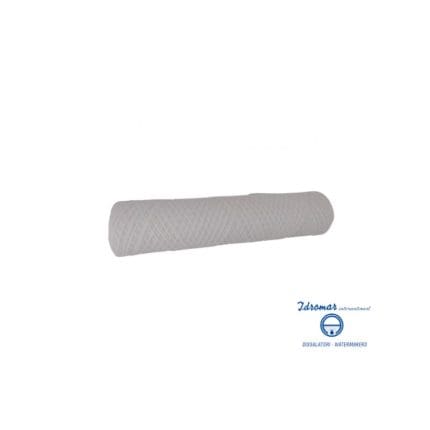 10" Wound Wire Cartridge 20 micron – code: 10MP20 – Idromar
 Stainless steel clamps Norma 12–22 mm – code: FAI0012022 – Toscogomma
 Brush with spring - code: SGM45 - Gianneschi Pumps and Blowers


How to use nautical technical guides to choose without mistakes
The nautical technical guides are really useful when they allow a cross-check between need, context, and compatibility. It is not enough to read a commercial description: a method is needed. The most effective is to start from what you already have onboard and build a progressive check.
You can follow this practical sequence:
- identify the installation area and photograph the technical context;
- record the useful dimensions and existing fastening points;
- check which nearby components could interfere;
- compare the actual function of the accessory with the use you will make of it;
- verify all the details not immediately evident in the product sheet.
This approach reduces compatibility errors and also makes it easier to compare different solutions. Furthermore, it helps to understand when it is convenient to choose a single accessory and when it is better to evaluate a complete category or a set of coordinated components.
If you are updating the setup or want to replace existing elements with a more coherent solution, explore the category dedicated to nautical accessories or delve into the available brands: a reasoned selection, read with technical attention, is the safest way to find accessories compatible with your sailboat.
FAQ
How to check the compatibility of sailboat accessories before purchase?
It is advisable to check the mounting area, dimensions, fastening points, interaction with nearby components, and actual usage mode. If a detail is unclear, check the product sheet.
Do sailboat accessories compatibility depend only on the measurements?
No. Measurements are important, but supports, surface type, mounting orientation, accessibility, and relationship with other elements on board also matter.
What is the most common mistake in choosing sailboat accessories?
The most common approach is to choose based solely on the declared function without considering the technical context of the boat. An accessory that is useful in theory can turn out to be uncomfortable or incompatible once installed.
When is it useful to consult nautical technical guides for accessories?
They are particularly useful when you need to replace an existing component, upgrade an area of the blanket, improve maneuver management, or compare multiple similar solutions with compatibility concerns.
Is it better to choose a single accessory or evaluate the entire category?
It depends on the type of intervention. If you are addressing a specific need, a single accessory may be enough, but when the installation involves supports, fastenings, or nearby components, it is better to analyze the entire category.


