When a marine toilet is really needed
The marine toilet is not an accessory to be evaluated only based on available space. On a boat, it affects comfort, ease of use, waste management, and maintenance simplicity. Precisely for this reason, in nautical technical guides most useful cases, the choice always starts with a concrete question: in what context will it be installed and with which system will it have to interact?
A boat bathroom used occasionally during short outings has different needs compared to a cabin used for cruises, extended stays, or frequent use by multiple people. The boat’s configuration also changes everything: location of the toilet room, pipe routing, presence of the black water tank, space for hydraulic and electrical connections, accessibility for any future interventions.
When evaluating a marine toilet, it is therefore advisable to consider three levels:
- actual use on board, that is frequency and intensity of use;
- existing system, to understand if the new system can integrate without invasive modifications;
- routine maintenance, because a theoretically suitable solution can become inconvenient if valves, pumps, and connections remain difficult to reach.
A common mistake is choosing the model only by shape or external size. In reality, the decisive point is the marine toilet compatibility with the onboard system. If this aspect is overlooked, the risk is ending up with untidy adaptations, non-optimized discharges, or installations requiring unplanned additional components.
Per orientarti meglio tra impianti, accessori e ricambi, può essere utile consultare anche le nostre guide tecniche nautiche, dove trovi approfondimenti dedicati ai principali sistemi di bordo.
Marine toilet: differences between solutions, sizes, and compatibility
Talking about differences means going beyond the most intuitive distinction between manual and electric systems. The real technical comparison concerns how the toilet integrates with the boat, the pipe routing, the type of discharge, and the ease of connection to already present components.
Compatibility with available space
The first check concerns the actual size. It is not enough to verify if the toilet body fits in the compartment. You also need to consider:
- space for opening and comfortable use;
- position of the connections;
- pipe bending radius;
- access to parts subject to maintenance;
- distance from bulkheads, furniture, and other systems.
In many cases, the problem is not the toilet itself but the possibility of connecting it without forced bends or awkward passages. If the compartment is compact, every centimeter counts. For this reason, it is always appropriate check the product sheet to consider the installation measurements and not just the external ones.
Discharge, suction, and pipe routing
Another key point in technical guides is the layout of the system. A marine toilet may theoretically be suitable but not very compatible with the actual pipe routing. The most common critical issues arise when:
- the connections do not match the useful direction of the pipe;
- the route requires too tight bends;
- the position of the tank imposes non-linear connections;
- the water suction and discharge require complex adaptations.
At this stage, the marine toilet compatibility should be read as overall compatibility: not just connection to connection, but coherence between toilet, pump, pipes, valves, and the layout of the onboard bathroom.
Manual or electric: the practical difference
The comparison between manual and electric systems is often oversimplified. In reality, the choice mainly depends on the type of system and the user experience you want on board.
A manual system is often appreciated for its simple construction and direct operation management. An electric system can offer greater ease of use but requires careful verification of integration with the existing system. In both cases, the correct criterion is not “which is absolutely better,” but which solution is more consistent with the boat.
Se stai aggiornando un impianto già presente, può essere utile confrontare anche pompe e accessori per impianti sanitari di bordo per capire se conviene mantenere parte della configurazione esistente oppure ripensarla in modo più ordinato.
Base, orientation, and position of connections
An often underestimated aspect concerns the base and the orientation of the connections. When replacing, many boat owners look for a toilet that “fits in place of the previous one,” but this equivalence rarely is limited to the shape. Also important are:
- the spacing of the fixing points;
- the orientation of the outlet;
- the accessibility of the fittings;
- compatibility with the pipes already installed;
- any need to move nearby components.
If even one of these elements does not match, the installation can become longer and less neat than expected. For this reason, before replacing a marine toilet, it is useful to precisely measure the compartment and photograph the existing connections.
Mistakes to avoid when choosing or installing the marine toilet
The most common issues almost never arise from a single component, but from an incomplete assessment of the system. Those looking for a quick solution tend to focus on the product; those wanting to avoid mistakes look instead at the entire system.
Choosing without checking system compatibility
This is the main mistake. A marine toilet may seem suitable by size or type, but prove unsuitable once discharge, supply, connection orientation, or maintenance space are checked. Compatibility must be verified before purchase, not during installation.
To reduce the margin of error, it is advisable to note:
- compartment measurements;
- direction and diameter of existing connections;
- type of installed system;
- available space around the toilet;
- components that could interfere with installation.
Neglecting future accessibility
An apparently successful installation can become problematic if components remain hidden or hard to reach. Valves, fittings, pumps, and pipes must be inspectable without complex disassembly. This aspect is crucial especially on boats with compact bathrooms, where space optimization risks penalizing maintenance.
A good choice is not only one that “fits,” but one that allows future interventions in a simple and orderly way.
Using improvised adaptations
When a toilet is not perfectly compatible, the temptation is to compensate with forced bends, additional fittings, or non-linear passages. This is a shortcut that often creates more problems than it solves. A clean, understandable, and coherent system is almost always preferable to a forcibly adapted solution.
Se hai dubbi sulla sostituzione di più componenti insieme, può essere utile approfondire anche i sistemi di scarico e i componenti collegati, così da valutare il wc all’interno dell’intero circuito.
Evaluating only aesthetics or seating
Comfort and design have their weight, but should not solely guide the choice. In the marine field, the priority remains technical functionality. A model visually suitable for the onboard bathroom may not be so from a system perspective. First check compatibility, then compare ergonomics, shape, and ease of use.
Ignoring the differences between new installation and replacement
Installing a marine toilet on a new system is different from replacing an existing one. In the first case, you have more design freedom. In the second, you must deal with existing constraints: holes, passages, pipes, orientations, and technical spaces. Those undertaking a replacement without considering these constraints risk choosing a theoretically valid solution but poorly suited to the real context.
Per una panoramica più ampia sui componenti collegati, puoi consultare anche gli accessori per l’impiantistica nautica e verificare quali elementi incidono davvero sulla compatibilità finale.
Products and categories to consider for a more accurate choice
When analyzing a marine toilet from a technical perspective, you should not stop at the sanitary unit alone. The correct choice often involves a set of related categories, because the operation depends on the interaction between multiple components.
Among the elements to consider are:
- pumps and management units, if provided by the system;
- pipes and fittings, to be checked based on the actual route;
- valves and connecting components, essential for integration with the system;
- spare parts and wear items, useful for keeping the system efficient over time;
- installation accessories, often decisive for achieving a clean installation.
This approach is typical of the best nautical technical guides: not limiting oneself to the main product, but reading the choice as part of a system. It is also the most effective way to avoid hidden incompatibilities that only emerge during installation.
Se stai pianificando una sostituzione o un aggiornamento del bagno di bordo, può essere utile esplorare ricambi e componenti per wc nautico per capire quali parti dell’impianto possono essere mantenute e quali invece meritano una revisione più attenta.
Another practical tip: before proceeding, gather all available information about your current system. Photos of the compartment, measurements, position of the connections, and pipe routing help to better compare options. Where a detail is unclear, the rule always remains the same: check the product sheet.
In a competitor-driven evaluation, what really makes the difference is not the number of options, but the ability to understand which solution reduces the margin of error. Good technical content does not promise shortcuts: it helps you choose methodically, reading the marine toilet as an integral part of the onboard system.
Recommended products

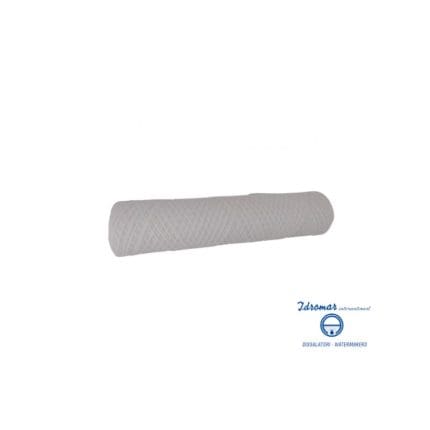 10" Wound Wire Cartridge 20 micron – code: 10MP20 – Idromar
 Stainless steel clamps Norma 12–22 mm – code: FAI0012022 – Toscogomma
 Brush with spring - code: SGM45 - Gianneschi Pumps and Blowers



How to navigate compatibility and final choice
If your goal is to avoid mistakes, the most effective path is simple: start from the available compartment, check the connections, inspect the pipe routing, and only then compare the available solutions. In this way, the choice of marine toilet becomes more precise, more technical, and above all more suitable for your boat.
To explore the available options in depth, browse the category dedicated to onboard sanitary systems and related components: you will find solutions designed for different system configurations, with the support of technical datasheets to verify every detail before purchase.
FAQ
How to check the compatibility of a marine toilet before purchase?
Check compartment measurements, position and orientation of connections, pipe routing, accessibility for maintenance, and the type of system already present. If a detail is unclear, check the product datasheet.
Is it easier to replace an existing marine toilet or to do a new installation?
Replacement may seem faster, but it often imposes constraints related to existing holes, pipes, and orientations. A new installation offers more design freedom, while a replacement requires greater attention to compatibility.
When choosing a marine toilet, do only the external dimensions matter?
No. Beyond the external dimensions, usage space, access to fittings, direction of connections, pipe bending radius, and the possibility to intervene on components over time all matter.
Why is system compatibility so important for a marine toilet?
Because the toilet must integrate with the drain, suction, pipes, valves, and any connected components. If compatibility is not checked beforehand, the risk is having to resort to inefficient or difficult-to-manage adaptations.
What are the most common mistakes made when installing a marine toilet?
The most common mistakes are choosing without checking the fittings, forcing the pipe routing, neglecting accessibility for maintenance, and evaluating the product only from an aesthetic point of view instead of a technical one.