When you really need to drive a motorboat
Driving a motorboat does not just mean starting the engine and heading towards the desired course. In technical terms, this expression encompasses a series of practical considerations: type of hull, engine response, maneuvering space, steering configuration, weight balance, and compatibility between components. Those who look for nautical technical guides today want to understand especially when a solution is truly suitable for their use and when, instead, it risks creating limits in maneuvering, comfort, or control.
The need to delve deeper arises particularly in some recurring cases:
- when moving from occasional use to more frequent use;
- when considering an upgrade of control components or onboard accessories;
- when wanting to improve precision in maneuvers;
- when noticing inconsistent behavior between acceleration, turning, and rudder response;
- when trying to understand the real motorboat driving compatibility between already installed elements and new solutions.
In practice, a technical guide is needed when the goal is not just to use the boat, but to understand how to make it work consistently with your own navigation style. A boat intended for short and calm outings requires different considerations compared to a configuration designed for more dynamic uses or frequent maneuvers in tight spaces.
Per orientarti tra i componenti collegati alla gestione e al controllo dell’imbarcazione può essere utile consultare anche le guide tecniche nautiche, dove confrontare criteri di scelta e logiche di installazione. Allo stesso modo, una panoramica su accessori per la nautica aiuta a capire quali elementi incidono davvero sull’esperienza di guida.
Actual use and boat behavior
A common mistake is to evaluate driving only based on the initial feeling. In reality, the quality of handling is measured in continuity: planing entry, course corrections, docking maneuvers, response to variable load, and ease of control in not always identical conditions. For this reason, driving a motorboat requires a comparative approach: it is not enough to ask if a solution works, but if it works well in your own context.
Among the signs indicating the need for a technical check are:
- steering perceived as too hard or not progressive enough;
- controls that do not provide a linear response;
- setup that changes markedly with varying load;
- maneuvers that require continuous corrections;
- unclear integration between components already on board.
In these cases, before randomly replacing elements, it is advisable to analyze the overall configuration and check the intended use in the product sheet.
Differences between solutions, measurements or compatibility for motorboat driving
Comparing technical solutions is at the heart of every informed choice. When talking about motorboat driving compatibility, the point is not only to understand if two components can be connected, but if they work together in a balanced way. A theoretical compatibility, in fact, does not always coincide with an effective result in practice.
The most important differences to evaluate concern three areas: type of solution, measurements and interaction with the boat.
Differences between control and command solutions
Each steering configuration has its own logic. Some prioritize immediacy and simplicity, others are designed for a more refined management of the response. The choice depends on how the boat is used, who is driving it, and the level of precision required in maneuvers.
When comparing solutions, always consider:
- how progressive the response to commands is;
- how intuitive the management is during slow maneuvers;
- how much the installation affects the onboard layout;
- how simple the integration is with components already present;
- how suitable it is for the type of hull and the dynamic behavior of the whole.
Those who consult nautical technical guides often this is exactly what is sought: a criterion to distinguish a solution that is simply installable from one truly coherent with its own setup.
Measurements: why they matter more than they seem
Measurements are not a secondary detail. Lengths, dimensions, passages, and available spaces influence both the installation and the final behavior. An incorrect measurement can cause friction, uneven paths, unfavorable curvature radii, or an ergonomically poor arrangement of controls.
When evaluating a solution, always check:
- available useful space in the installation area;
- path of connections between the driving station and the relevant component;
- compatibility with existing supports, brackets, and predispositions;
- actual dimensions in relation to the structure of the boat;
- any limits indicated by the manufacturer, to be checked in the product sheet.
A choice made without considering the measurements may seem correct on paper but prove inefficient once installed. This is one of the reasons why technical evaluation should always precede purchase.
Compatibility: not just attachment, but system
The word compatibility is often used too generically. In reality, for driving a motorboat with continuity and control, compatibility should be understood as the relationship between all involved elements: control station, motion transmission components, installation geometry, and engine response.
A well-assessed compatibility should answer concrete questions:
- is the component designed for the intended type of use?
- does the installation require non-ideal adaptations?
- are the stroke or excursion consistent with the existing system?
- does the mounting position promote natural steering?
- is future maintenance still easy?
Per approfondire questi aspetti, può essere utile consultare i sistemi di comando e controllo e confrontarli con componenti per la timoneria nautica, così da valutare meglio l’insieme e non il singolo pezzo isolato.
Mistakes to avoid in choice or assembly
Many problems attributed to the quality of a component actually depend on an initially imprecise choice or an installation inconsistent with the application. In serious technical guidance, mistakes to avoid are often more useful than generic promises because they help recognize critical issues before they become a limitation during navigation.
Choosing based on habit and not on configuration
One of the most frequent mistakes is replicating a solution already seen on another boat. Two apparently similar boats can have very different needs for weight distribution, layout, stern geometry, or engine response. Copying a configuration without analyzing the context often leads to less precise steering than expected.
The practical rule is simple: do not choose by similarity, but by real compatibility.
Neglecting the installation path
A correct component, if installed along an unfavorable path, can lose much of its effectiveness. Too tight curves, forced passages, interference with other onboard elements, or poorly accessible placements compromise system fluidity and durability.
Before assembly, it is advisable to check:
- accessibility of fastening points;
- cleanliness of the linkage path;
- absence of rubbing or compression;
- ease of future inspection;
- consistency between the position of the control and driving posture.
These aspects seem secondary only at the initial stage. In daily use, however, they make the difference between natural handling and tiring management.
Underestimating the ergonomics of the workstation
Driving does not depend only on mechanics. Ergonomics also matters: steering wheel position, accessibility of controls, visibility, and freedom of movement directly affect the quality of maneuvers. A poorly designed workstation forces continuous compensations and makes boat control less intuitive.
Se stai rivedendo l’assetto della tua postazione, può essere utile esplorare soluzioni per la plancia e la postazione di guida in modo da valutare insieme funzionalità e disposizione.
Ignoring signals after installation
After installation, some signals deserve immediate attention: irregular response, feeling of sticking, frequent need to correct the course, or marked differences between maneuvers unloaded and under load. They do not always indicate a component defect; more often they suggest that something in the configuration or installation needs to be reviewed.
In these cases, it is preferable to stop and recheck the whole system, rather than continue using it hoping the behavior will stabilize on its own.
Products and categories to consider
When addressing the topic driving a motorboat with a truly technical approach, it is useful to think in terms of functional categories. This approach helps avoid getting lost in isolated details and to build a coherent configuration, from the control station to the elements that transfer movement.
The categories to consider, in general, are those related to:
- steering and control systems;
- linkage components between control and affected parts;
- mounting and fastening elements;
- accessories that improve ergonomics, order, and accessibility;
- complementary parts useful to make the whole more homogeneous.
The correct criterion is not to look for the most well-known component, but the one best suited to your onboard project. A well-made choice arises from the intersection of available space, usage logic, boat predisposition, and overall compatibility.
If you are comparing different options, always consider these steps:
- define how you really use the boat;
- map the components already installed;
- check measurements, steps, and clearances;
- verify the intended use in the product sheet;
- assess whether the setup truly improves driving precision and comfort.
This method is particularly useful for those looking nautical technical guides with a comparative approach, because it allows moving from a choice based on impression to a decision based on concrete criteria.
Another important aspect is consistency over time. A well-thought-out configuration must not only work today but also remain manageable in case of maintenance, updates, or future replacements. For this reason, it is advisable to favor clear, accessible, and easily verifiable solutions.
Recommended products

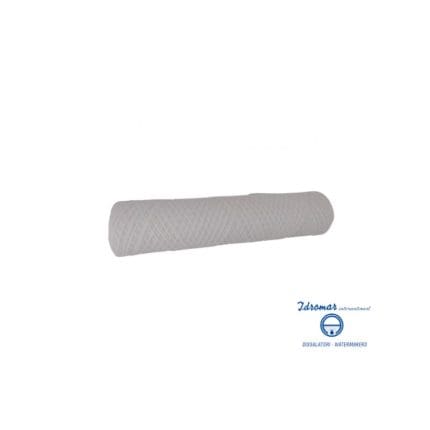 10" Wound Wire Cartridge 20 micron – code: 10MP20 – Idromar
 Stainless steel clamps Norma 12–22 mm – code: FAI0012022 – Toscogomma
 Brush with spring - code: SGM45 - Gianneschi Pumps and Blowers


Useful links to deepen nautical technical guidance
Per scegliere con maggiore consapevolezza può essere utile confrontare contenuti dedicati a impianti e sistemi per la nautica e ad altre technical guides focused on component compatibility. A well-structured reading path allows understanding not only what to install but especially why one solution is more suitable than another.
If you are considering how to improve your onboard configuration, explore the category dedicated to steering and control systems or the reference brand available in the catalog: you will find solutions designed to make boat management simpler, more precise, and consistent.
FAQ
How to understand if a solution is suitable for driving a motorboat?
It is necessary to evaluate together the type of boat, the configuration of the driving station, the available space, the installation path, and compatibility with the components already present. It is not only about possible installation, but the final behavior of the system.
What does driving a motorboat compatibility mean?
Indicates the technical consistency between control, connections, installation position, and boat response. Correct compatibility concerns not only the fittings but the harmonious functioning of the entire system.
Why are measurements so important in the choice?
The measurements affect dimensions, clearances, bending radii, accessibility, and ease of assembly. If they are not correct, even a valid solution can be awkward or uncomfortable to handle.
What mistakes are most often made during assembly?
Among the most common mistakes are choosing out of habit rather than real compatibility, forcing the installation path, poor attention to the ergonomics of the station, and failure to check signals after installation.
Where to check an unclear technical detail?
If information is uncertain, the best solution is to verify it in the product sheet. It is the most useful reference to check intended use, declared compatibility, and installation instructions.