When nautical teak is really needed
In the world of nautical technical guides, the topic of nautical teak is often approached superficially: on one hand, there are those who consider it a purely aesthetic choice, on the other hand, those who treat it as a universal solution for every deck or external finish. In reality, teak in the nautical field makes sense only when selected based on the usage context, the substrate on which it must be applied, and the result you want to achieve over time.
It is really needed when the goal is to create or restore a surface with good visual stability, adequate grip, and consistency with the boat's outfitting. However, it is not always the right answer. In many situations, the problem is not the material itself, but the choice of a solution unsuitable for the type of deck, the installation method, or continuous exposure to water, salt, and UV rays.
Uno degli errori più comuni è partire dalla finitura desiderata senza analizzare il supporto. Una superficie irregolare, non correttamente preparata o incompatibile con adesivi e sigillanti può compromettere il risultato finale anche se il teak scelto è di buona qualità. Per questo, prima di procedere, è utile approfondire anche i temi legati alla preparazione delle superfici e ai cicli di installazione consultando risorse come guide tecniche per la coperta o approfondimenti sui materiali nautici.
Nautical teak is therefore mainly recommended in these cases:
- refurbishment of walkable areas subject to frequent use;
- restoration of deteriorated areas where maintaining aesthetic and functional continuity is important;
- outfittings where compatibility between substrate, adhesive, and sealant has already been verified;
- interventions where future maintenance and cleaning have been considered from the start.
On the contrary, it makes less sense to choose teak just to imitate other boats or to follow a trend. In technical terms, the initial evaluation error often results in recurring problems: detachments, irregular joints, visual deformations, infiltrations, or premature wear of the most exposed areas.
Those looking for information on nautical teak compatibility usually has already encountered one of these problems or wants to avoid it before purchase. And this is precisely the right question: more than the finish, the compatibility of the entire system matters.
Differences between solutions, sizes, or compatibility of nautical teak
When comparing different solutions for nautical teak, the evaluation should not stop at the superficial aspect. The real differences concern useful thickness, application methods, behavior on the substrate, and compatibility with other materials on board. In a comparative logic, this is where the success of the work is decided.
Compatibility with the substrate
The first check concerns the base on which the teak must be installed. Fiberglass, painted surfaces, composite panels, or already treated substrates require different attentions. A solution that works well on a properly prepared base can prove problematic on a surface contaminated by old residues, waxes, oils, or sealants not completely removed.
When talking about nautical teak compatibility, at least three levels must be considered:
- mechanical compatibility, that is adhesion and stability on the substrate;
- chemical compatibility, among teak, adhesives, primers, sealants, and cleaners;
- functional compatibility, that is consistency between the chosen material and the actual use of the area.
Many problems arise from the fact that only the first aspect occurs. However, even an initially seemingly correct adhesion can degrade if the system has not been designed as a whole. If you have doubts, the safest criterion is simple: check the product sheet compatibility with the substrate and with the other components of the installation cycle.
Differences in measurements and geometries
Another often underestimated point concerns measurements and geometries. It is not just about choosing slats or panels with a certain visual appeal, but understanding how those dimensions will behave on a real surface, often curved, interrupted by accessories, technical passages, and drainage points.
Measurements influence:
- ease of adaptation to bow, stern, or side decks;
- regularity of joints;
- the amount of cuts and joints needed;
- the risk of errors during alignment;
- subsequent maintenance.
A theoretically elegant solution can become much more complex to manage if the area to be covered has corners, curves, or discontinuities. In these cases, the typical mistake is forcing the material onto an unsuitable geometry, resulting in tensions, inconsistent joints, or untidy details.
Traditional solutions and more practical approaches
Nel confronto tra soluzioni disponibili, non esiste una risposta valida per tutte le imbarcazioni. Esistono invece approcci più o meno adatti in base al livello di personalizzazione richiesto, alla complessità della posa e alla manutenzione che l’armatore è disposto a seguire. Per orientarsi, può essere utile confrontare anche sistemi di incollaggio nautico e materiali per finiture esterne, così da capire se il progetto richiede un intervento artigianale, un ripristino localizzato o una soluzione più lineare da gestire.
In a serious technical analysis, teak should never be evaluated alone. It must be seen as part of a system composed of substrate, adhesive, sealant, finish, and maintenance. It is this overall vision that distinguishes a correct choice from a source of future problems.
Mistakes to avoid in choosing or installing nautical teak
Among all the topics covered in nautical technical guides, mistakes in choosing and installing teak are among the most frequent because they often stem from decisions made too quickly. The problem is not only “how to install”, but especially how to prepare the work before installation.
Choosing without analyzing the actual use of the surface
A sunbathing area, a walkway, and a small deck do not have the same level of stress. Yet they are often treated the same way. This leads to selecting a solution that is not consistent with the intensity of foot traffic, water exposure, or the presence of accessories that interrupt the continuity of the surface.
Before choosing, ask yourself:
- Is the area subject to frequent water stagnation?
- Are there hatches, hinges, or components that need frequent inspection?
- Is the surface flat or does it have pronounced curves?
- Will it be necessary to remove or replace portions in the future?
Neglecting these questions almost always leads to a less durable and more difficult to maintain result.
Ignoring substrate preparation
This is probably the most common mistake. A dirty, damp, unstable, or improperly sanded substrate compromises adhesion and makes the entire system vulnerable. Even minimal residues of old products can interfere with bonding or joint sealing.
Good preparation requires attention to:
- thorough cleaning of the surface;
- removal of contaminants and pre-existing residues;
- uniformity of the support;
- possible use of primers or compatible products, if specified;
- compliance with the instructions provided in the product data sheet.
Skipping even one of these steps increases the risk of localized detachment or aesthetic defects which, once they appear, are difficult to correct without invasive intervention.
Underestimating joints, seams, and perimeter details
Many seemingly well-executed jobs show their first limitations precisely in the details: uneven joints, poorly protected edges, irregular seams, improvised connections around cleats, handrails, or hatches. These elements affect both aesthetics and functionality.
The most common mistakes at this stage are:
- approximate alignments;
- cuts made without considering system expansion;
- sealants inconsistent with the substrate;
- lack of protection in areas most exposed to infiltration or wear.
A good result is recognized precisely by the quality of the details. If these are not well designed, teak quickly loses its technical and visual value.
Using products not verified as compatible
Another recurring mistake is combining different materials without prior verification. Adhesives, sealants, cleaners, and surface treatments may seem interchangeable, but in the nautical field incompatibilities often manifest over time, not always immediately.
For this reason, when addressing the topic nautical teak compatibility, it is essential not to improvise. If a product is intended to be used in combination with other materials, check the product sheet instructions, usage limits, and recommended supports. It is a simple precaution that avoids many of the most common issues.
Products and categories to consider for a more reliable job
Talking about nautical teak without considering the support categories means stopping halfway through the job. A successful intervention actually depends on a technical supply chain composed of multiple elements, each with a precise role. It is not enough to choose the coating: you need to build a coherent system.
The categories to carefully evaluate are generally:
- products for preparation and cleaning of the support;
- adhesives specific for nautical applications;
- sealants for joints and seams;
- primers or adhesion promoters, if required by the cycle;
- solutions for routine maintenance and subsequent cleaning.
This approach is particularly useful when comparing a competitor's catalog or looking for more reliable technical alternatives. Often the difference is not made by the single component, but by the clarity with which compatibility, intended uses, and application limits. are presented. A well-structured catalog helps prevent errors; a generic one, on the contrary, forces the user to deduce information that should be explicit.
Per approfondire la scelta dei materiali collegati, possono essere utili anche soluzioni per sigillatura nautica e contenuti dedicati ai cicli completi di posa. In una prospettiva professionale, la selezione delle categorie corrette riduce il margine di errore e rende più semplice mantenere il lavoro nel tempo.
Another important aspect is the continuity between installation and maintenance. If the teak is installed correctly but then managed with aggressive detergents or unsuitable procedures, the result deteriorates faster. Here too the same rule applies: do not improvise and always check the available usage instructions.
Those working on site, in refitting or routine maintenance know well that recurring problems almost never arise from a single factor. More often they stem from a sum of small incompatibilities: roughly prepared substrate, adhesive chosen out of habit, inconsistent sealant, final cleaning performed with unsuitable products. The solution, therefore, is not to look for the “miracle product,” but to build a sensible technical system.
Recommended products

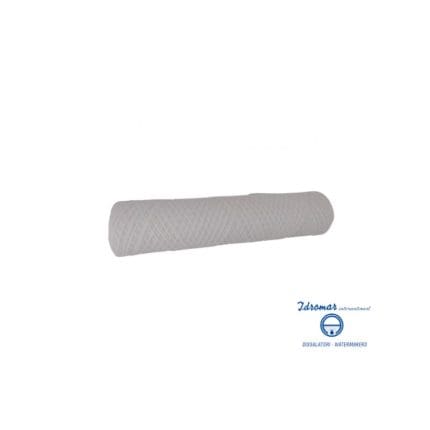 10" Wound Wire Cartridge 20 micron – code: 10MP20 – Idromar
 Brush with spring - code: SGM45 - Gianneschi Pumps and Blowers
 Stainless steel clamps Norma 12–22 mm – code: FAI0012022 – Toscogomma


How to avoid recurring problems over time
Once the installation is complete, nautical teak continues to require attention. Not necessarily complex interventions, but consistent management. Many defects attributed to the material actually depend on improper maintenance, overly aggressive washing, or inspections carried out too late.
To reduce the most frequent problems, it is advisable to follow some good practices:
- periodically check the condition of joints and edges;
- remove dirt and residues without using unsuitable procedures;
- immediately intervene on small detachments or localized anomalies;
- avoid products not declared compatible with nautical surfaces;
- maintain consistency between materials used in installation and materials used in maintenance.
This preventive logic is what distinguishes a job destined to age well from one that, after a short time, begins to show critical issues. In other words, teak must not only be chosen well: it must also be managed as an integral part of boat maintenance.
If you are evaluating materials, accessories, and complementary solutions for a safer intervention, explore the dedicated categories and compare the available systems: starting from compatible products and clear technical information is the best way to avoid mistakes from the beginning.
FAQ
When is it convenient to use nautical teak on a boat?
It is convenient when the surface to be covered requires aesthetic continuity, good walkability, and an installation system compatible with the substrate. Before choosing, consider the actual use of the area, exposure to external agents, and substrate preparation.
What does nautical teak compatibility mean?
Indicates the correct interaction between teak, substrate, adhesives, sealants, primers, and maintenance products. It is not enough for the material to adhere initially: the entire system must be compatible to avoid detachment, irregular gaps, or degradation over time.
What is the most common mistake in nautical teak installation?
The most common mistake is neglecting surface preparation. Dirty, unstable, or contaminated surfaces with pre-existing residues compromise adhesion and durability of the work, even if the chosen material is correct.
Do the teak measurements really affect the final result?
Yes. Size and geometry affect alignment, number of cuts, curve management, joint regularity, and ease of maintenance. An unsuitable measurement for the surface can make installation more complex and less clean.
How to avoid recurring problems after installation?
It is useful to periodically check seams and edges, use only products compatible with nautical surfaces, and address small anomalies immediately. Maintenance should also follow the instructions provided in the product sheet, if available.