When you really need to choose boat accessories Milan based on the system
Talking about boat accessories Milan usefully means going beyond the simple search for the “generally suitable” component. In the nautical field, in fact, a solution may seem correct in the catalog but prove to be inconsistent with the system already on board. This is where a technical evaluation makes the difference: it’s not just the function of the accessory that matters, but how it integrates with lines, connections, materials, and existing configuration.
Those who compare multiple alternatives often start from the product category, but the most reliable criterion is another: understanding which problem it has to solve in the real system. An accessory intended for the water circuit, fuel management, ventilation, or fluid transfer requires different checks. Even when two solutions appear similar, attachments, dimensions, installation methods, and compatibility with already installed materials can vary.
In this logic, the nautical technical guides are useful because they help to read the context before the product. If you are evaluating a replacement or an integration, it is advisable to start with some practical questions:
- does the accessory have to replace an existing element or add a new function;
- has the system been modified over time or is it still in the original configuration;
- are there fittings, pipes, or supports that impose a mandatory choice;
- does the mounting space allow equivalent solutions or not;
- does the component work continuously with other elements that affect its use.
Many errors arise precisely from underestimating these aspects. An accessory that is correct “on paper” may require unforeseen adaptations, while a less obvious alternative may be easier to integrate. To deepen the evaluation method, it can be useful to consult nautical technical guides and compare the datasheets in a reasoned way.
Differences between solutions, sizes, or compatibility in boat accessories Milan
The most delicate part of the choice concerns the compatibility. When looking for boat accessories Milan compatibility, in reality, multiple technical levels are touched simultaneously. There is not just one compatibility: there is mechanical, system, material, and intended use compatibility.
Mechanical compatibility: attachments, dimensions, and orientation
The first check always concerns the physical connection. An accessory may have the correct function but not be installable without modifications. In particular, it is advisable to verify:
- type of attachments and correspondence with the fittings already present;
- orientation of connections in relation to the available space;
- overall size in relation to the technical compartment;
- fixing methods and presence of compatible supports.
These aspects are crucial especially in replacements. If the goal is to replace an existing component without intervening on the rest of the system, even a small difference can change the work required. In case of doubt, check the product sheet information related to connections and mounting dimensions.
Compatibility with the existing circuit
A second level concerns how the accessory fits into the circuit. It is not enough that it “fits”: it must also work coherently with the rest of the system. This applies, for example, when the component enters a line already composed of multiple connected elements. In these cases, it is useful to consider the fluid path and the function of the point where the intervention takes place.
The correct questions to ask are:
- the component is designed to be inline, branched off, or at the circuit closure;
- its position affects accessibility for inspection and maintenance;
- installation requires other connecting or adapting elements;
- the current system configuration allows for a clean and orderly installation.
Those comparing similar alternatives often overlook the issue of system layout. In reality, a solution easier to integrate is almost always preferable to one that forces the routing of lines or requires rethinking the fixing.
Materials and operating environment
Another key point is material compatibility. In the nautical field, exposure to humidity, saltwater, and usage cycles makes consistency between the accessory and the working environment important. Even without entering unavailable specifics, it is good practice to verify that the component’s material is suitable for the type of system on which it will be installed.
This check is particularly useful when working on systems that are already old or modified over time, where different materials may coexist. In these cases, a careful reading of the datasheets and comparison with the component already installed help to avoid approximate choices. To navigate between components and applications, you can consult insights on nautical systems and use the catalog as a technical comparison tool, not just commercial.
Mistakes to avoid in choosing or mounting
When purchasing accessories for the boat, the most common mistakes do not depend on the perceived quality of the product, but on an incomplete assessment of the installation context. In a competitor-driven comparison, this is often the point that distinguishes an effective choice from one only apparently convenient.
Choosing by visual similarity
One of the most frequent mistakes is selecting an accessory because it “looks the same” as the one already present. External similarity does not guarantee compatibility. Attachments, configuration, orientation, or integration methods with the circuit may differ. Before proceeding, it is advisable to always compare function, connections, and available space.
Ignoring the system logic
An accessory never works alone. Installing it without considering the rest of the system can cause installation, access, or maintenance problems. This happens especially when replacing a component in a system layered over time, where every previous modification has already influenced the original layout.
To reduce the margin of error, it is useful to perform an orderly check:
- identify the precise function of the component to be replaced;
- check the path of the lines upstream and downstream;
- observe how the current part is fixed;
- verify if access for assembly and inspection remains easy;
- compare the technical information available in the product sheet.
Neglecting the actual assembly
Another common mistake is to evaluate only the moment of purchase and not the actual installation. On a boat, spaces are often conditioned by other components, pipe bends, narrow passages, or hard-to-reach points. For this reason, the correct choice is not always the one that seems most immediate in the catalog, but the one that reduces adaptations and interferences.
If you are comparing multiple options, it can be useful to also read the technical datasheets of nautical components with a practical approach: don't just ask “what is it for,” but “how does it really fit into my system.”.
Confusing equivalent replacement and alternative solution
An accessory is not always purchased as a direct replacement. Sometimes an alternative solution is sought, perhaps to improve the system’s order or adapt to a different configuration. The problem arises when this choice is approached as if it were a simple equivalent replacement. The two situations must be kept distinct.
In the first case, the goal is to maintain consistency with the existing system. In the second, one must more carefully evaluate effects on connections, supports, and the organization of the technical compartment. If the doubt concerns the full correspondence between accessory and system, check the product sheet and compare the information with the component installed on board.
Products and categories to consider for a more technically correct choice
When analyzing the boat accessories Milan with a technical criterion, it is advisable to think in terms of functional categories and not by individual item. This approach allows a better understanding of which component families truly affect system compatibility and which, instead, can be evaluated with greater flexibility.
The categories to observe carefully are especially those that interact directly with onboard circuits. In particular, accessories that deserve a more thorough check are those that:
- connect to existing pipes or fittings;
- require precise orientation for installation;
- must coexist with limited technical spaces;
- are part of an already configured assembly;
- influence accessibility, order, and maintenance of the system compartment.
This method is also useful for comparing similar offers on the market. Often the difference is not in the declared function, but in ease of integration what you already have on board. For this reason, before choosing, it is advisable to explore the catalog by technical families and evaluate alternatives based on your actual system.
Practical support can come from consulting categories dedicated to technical boating, where comparing solutions helps to more quickly identify the correct type. Also, reading support content for component selection can make the distinction clearer between a compatible, adaptable, or poorly suited accessory for your layout.
In a professional blog focused on nautical technical guides, the central point always remains the same: do not choose the most generic accessory, but the one that fits most coherently into the system. It is a simple criterion, but often overlooked in quick comparisons.
Recommended products

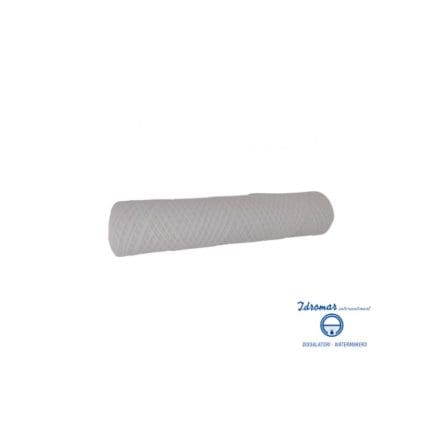 10" Wound Wire Cartridge 20 micron – code: 10MP20 – Idromar
 Brush with spring - code: SGM45 - Gianneschi Pumps and Blowers
 Desalination maintenance kit – code: Cleaning Kit (SC1 + SC2) – Schenker
 Stainless steel clamps Norma 12–22 mm – code: FAI0012022 – Toscogomma


 Check valve – code: T-PF.P30 – Tecma
How to read a product sheet without stopping at the commercial description
To understand which solution is really convenient, it is useful to know how to read the product sheet carefully. Many users focus on the initial description, but decisive information is often in the technical details and application notes. Even when the catalog is well organized, the real difference is made by how the sheet is interpreted in relation to your own system.
The elements to check more carefully are:
- intended use of the component;
- type of connection expected;
- construction shape and orientation of the connections;
- declared compatibility, if present;
- assembly notes or indications to verify before purchase.
If a sheet does not clarify an essential detail for your system, the correct criterion is not to “assume it fits,” but to stop and investigate further. In these cases, the most cautious approach is always the same: check the product sheet and compare the data with the existing component or with the layout of the technical compartment.
Boat accessories Milan compatibility: the most reliable method to compare alternatives
If the goal is to choose consciously among multiple options, the most effective method is to build an essential technical comparison. Complex analyses are not needed: just order the checks in the right way. This approach is particularly useful when looking for boat accessories Milan compatibility and you want to avoid a selection based only on images or brief descriptions.
You can proceed as follows:
- identify the precise function of the component in the system;
- note attachments, orientation, and available space;
- verify if the installation is a replacement or a new installation;
- check consistency with existing materials and configuration;
- compare the sheets of alternatives without stopping at the category name.
This scheme helps reduce errors and select solutions truly consistent with the intended use. In practice, you are not just looking for an accessory: you are looking for the best level of integration with your system. This is the difference between a quick choice and a technical choice.
If you want to navigate between categories and brands with a more informed approach, explore the catalog and delve into the sections dedicated to technical boating: you will find solutions to compare based on the actual system, not just the general description of the component.
FAQ
How to understand if a boat accessory is compatible with the existing system?
The most useful check starts from attacks, encumbrances, orientation of connections, and the actual function of the component in the circuit. It is not enough for the accessory to look similar to the one already installed: it must integrate with fittings, available space, and system configuration. In case of doubt, check the product sheet.
When is it convenient to replace a component with an equivalent solution?
It is advisable to choose an equivalent solution when the goal is to maintain the existing layout without changing joints, fastenings, or the routing of the lines. However, if you are rethinking the technical compartment or the arrangement of the system, it may make sense to consider an alternative, provided it is compatible with the system as a whole.
What is the most common mistake when choosing boat accessories in Milan?
The most common mistake is to purchase based on visual similarity or only the commercial category. In the nautical field, what matters most is the real compatibility with the system: connections, mounting space, materials, and accessibility for maintenance.
Why do nautical technical guides help in making a choice?
Nautical technical guides help to understand the installation context before the product. This approach allows for a more precise comparison of alternatives, avoiding generic choices and focusing on function, compatibility, and integration into the system.