


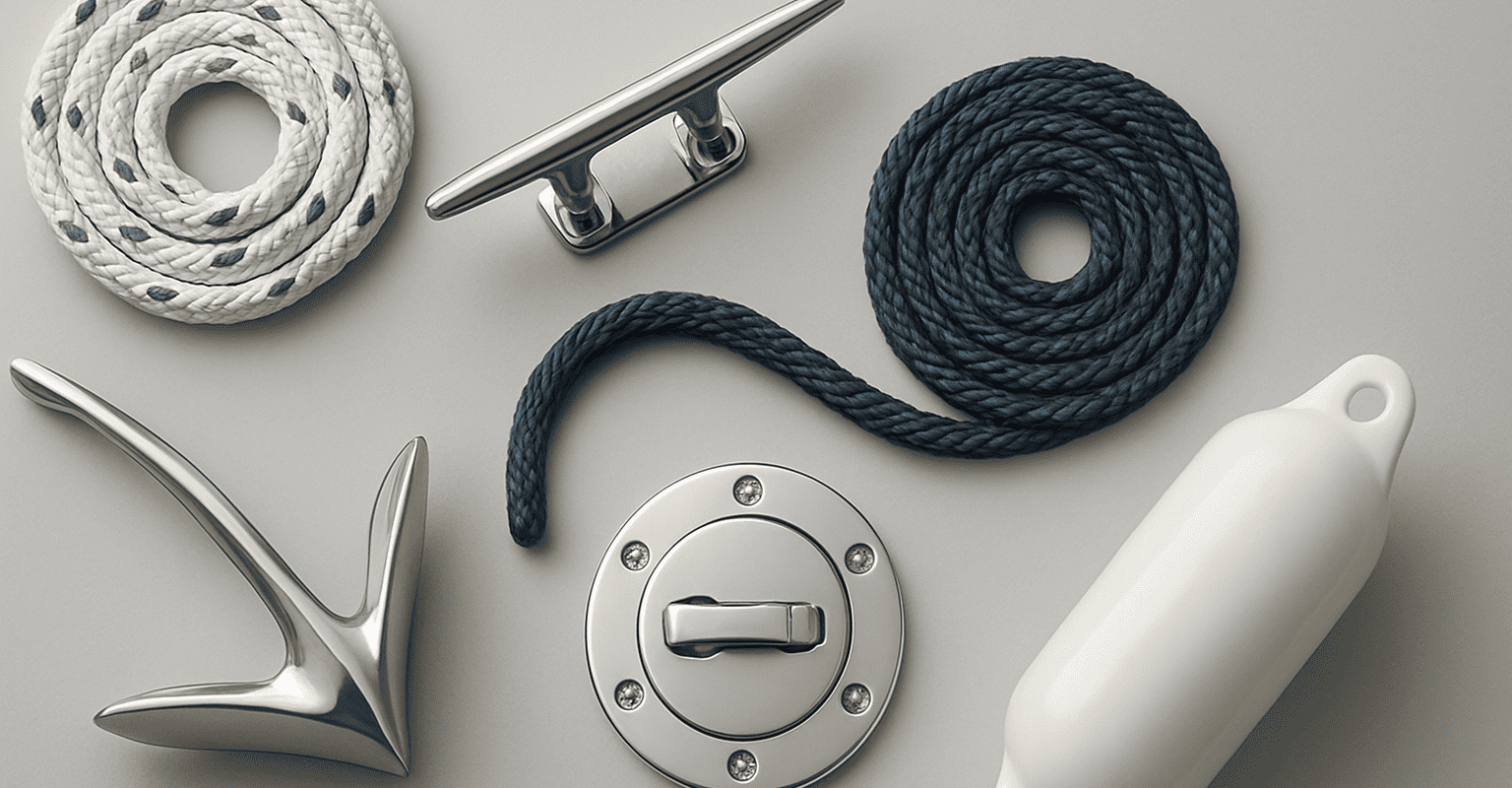
Those looking for boat accessories Fiumicino often has a very concrete goal: to find suitable components for your boat without wasting time on returns, makeshift adaptations, or purchases that are inconsistent with the existing system on board. In a technical context like the nautical one, the choice is not reduced to “works or doesn’t work”: dimensions, fittings, materials, boat configuration, and intended use come into play.
This guide is created with a practical and comparative approach, designed for those who want to navigate the main variables of choice. The goal is not to propose a generic list, but to help you correctly read the datasheets, compare options, and understand where the most frequent mistakes hide. If you are considering components for deck, systems, or onboard equipment, starting from a logic of compatibility is the most effective way to choose well.
To deepen the general context of nautical technical guides, può essere utile consultare anche le risorse dedicate alla manutenzione di bordo, gli approfondimenti sugli impianti nautici e le indicazioni per scegliere ricambi e accessori.
When boat accessories Fiumicino are really needed
The search for boat accessories Fiumicino becomes truly relevant in all those cases where the boat requires a component that is not only “similar” to the existing one, but consistent with the onboard system. This happens especially in three situations: replacement of a worn accessory, upgrade of a part of the boat, or integration of a new element into an already configured system.
In the first case, the most common mistake is to buy an accessory by looking only at the external shape or general function. In reality, two visually similar components can have different fittings, mounting dimensions, or materials. In the second case, when upgrading an area of the boat, you need to check if the new element correctly interacts with what remains installed. In the third, that is when adding an accessory to an existing system, the critical point is integration: every part must fit without forcing or random adaptations.
A technical evaluation is particularly useful when:
- the accessory must be mounted on already existing supports;
- the replacement takes place in tight spaces or with constrained dimensions;
- mechanical, hydraulic, or electrical connections are involved;
- the material of the new component must be compatible with the installation environment;
- the boat has already undergone modifications over time and no longer corresponds to the original configuration.
In these situations, relying on a technical approach avoids hasty purchases. Before choosing, it is advisable to collect photos of the mounting point, precisely measured dimensions, and data of the component to be replaced. If a piece of information is unclear, check the product sheet or compare the detail with the available documentation.
Per chi desidera una panoramica più ampia sui criteri di selezione, possono essere utili anche le guide per la scelta degli accessori nautici e gli approfondimenti sulle compatibilità tra componenti di bordo.
Differences between solutions, sizes or compatibility in Fiumicino boat accessories
The central point, when talking about Fiumicino boat accessories compatibility, is to understand that the same function can be covered by very different solutions. The difference is not only about design or usage mode, but especially about how the component fits into the structure of the boat.
Mechanical compatibility: attachments, dimensions and positioning
The first check concerns the mechanical compatibility. An accessory may seem correct on paper, but prove unsuitable once on board if it does not match the fastening system or the available space. It is important to check:
- type of connection;
- spacing and fastening points;
- diameters or connection sections;
- mounting orientation;
- overall clearance when opening, closing or in use.
These aspects matter more than they seem. A component installable only with invasive modifications is not a practical solution, even if it performs the required function. In the nautical field, mounting precision makes the difference between a well-integrated accessory and one that causes problems over time.
Compatibility of materials and the onboard environment
Another often underestimated element is the material. The boat is a complex environment: humidity, salt spray, vibrations and continuous use require accessories designed to last over time. It is not enough for the component to “fit” the available space; it must also be suitable for the context in which it will be installed.
When comparing multiple options, consider:
- materials of the component and existing supports;
- possible interactions between different surfaces;
- intended use of the mounting area, internal or external;
- exposure to marine agents;
- presence of frequent stresses.
If the manufacturer indicates usage limits or special conditions, it is always advisable to check the product sheet. This is one of the most useful steps in nautical technical guides, because it helps avoid incompatibilities that do not emerge from a simple photo.
Functional compatibility: it is not enough that the part is similar
The third area of control is the functional compatibility. Two accessories can belong to the same family but be designed for different configurations. In practice, the component must perform the required function correctly, without compromising the use of the boat or other nearby elements.
For example, it is useful to ask:
- does the accessory work in continuity with other components already present?
- does it require adapters or additional elements?
- does the mounting position affect accessibility and maintenance?
- is the chosen solution consistent with the actual use of the boat?
This analysis is essential especially when comparing multiple alternatives available in the same catalog. The best choice is not always the most immediate one, but the one that minimizes installation and usage compromises.
Mistakes to avoid in choice or assembly
Many problems related to boat accessories Fiumicino do not arise from the product itself, but from a selection phase approached too hastily. The most common mistakes are recurring and, precisely for this reason, can be avoided with a simple method.
Confusing visual similarity with real compatibility
One of the most frequent mistakes is relying solely on the external appearance. An accessory that looks identical to the one being replaced can differ in decisive details: attachment, orientation, installation depth, materials, or usage configuration. In boating, aesthetic similarity is not a technical guarantee.
To avoid this mistake, always compare the existing component with the available documentation. If complete data is missing, collect measurements and images of the mounting point before proceeding.
Neglecting the context of the system or installation area
Another mistake is evaluating the single accessory in isolation. In reality, every onboard element is part of a whole. A component that is correct in the abstract can become problematic if it interferes with cables, pipes, openings, passages, or other nearby accessories.
Before purchasing, it is advisable to check:
- usable space around the mounting point;
- any hidden obstacles behind panels or bulkheads;
- ease of access for installation and maintenance;
- consistency with components already present.
This approach reduces the risk of having to rethink the installation once work has started.
Underestimating measurements taken onboard
Imprecise measurements are a typical cause of incompatibility. Often generic references are taken or only the visible part of the component is measured, neglecting thicknesses, depths, or secondary dimensions. The result is a theoretically correct accessory but difficult to install.
A good practice is to systematically record:
- main measurements of the component to be replaced;
- distances between fixing points;
- available space in front, behind, and laterally;
- any differences between the right and left side or between surfaces that are not perfectly regular.
If the catalog includes technical drawings or dimensional views, use them as a reference. Where the data is not explicitly stated, check the product sheet.
Assembling without checking the consistency of the whole
A final mistake, often underestimated, is proceeding with assembly without an overall check. Even when the component is correct, the installation must respect the logic of the boat: accessibility, orientation, interference, and daily use. A well-mounted accessory must not only “stay in its place” but also remain functional over time.
For this reason, before final fixing, it is useful to simulate the positioning, check movements and openings, and ensure that the use of the accessory does not compromise other onboard operations.
Products and categories to consider
When analyzing the Fiumicino boat accessories compatibility, it is better to think in terms of functional categories rather than impulsive purchases. This method helps to better compare options and immediately identify the truly relevant information in the technical datasheets.
Deck and fastening accessories
A first area to evaluate concerns all components intended for the deck or fastening points. Here compatibility mainly depends on materials, drilling, dimensions, and mounting methods. In this family, the correct choice often depends on the installation surface and the type of intended use.
When comparing options, ask yourself if the component is suitable for the existing structure and if it can be mounted without unforeseen modifications. The position on the boat also greatly affects this: a particularly exposed area requires extra attention when reading the characteristics.
Onboard system components
A second group includes accessories connected to the systems present on the boat. In this case, compatibility is not only physical but also functional. A component must fit into the system without creating discontinuities or requiring unreliable adaptations.
The most useful checks concern:
- type of required connection;
- consistency with elements already installed;
- available space for mounting and maintenance;
- environmental conditions of the technical area.
If you are comparing multiple solutions, prioritize those that clarify the context of use. The nautical technical guides are particularly useful precisely for interpreting these differences without stopping at the commercial description.
Complementary equipment and integration accessories
There is also a range of accessories that do not directly replace a worn component but complete or improve the functionality of an area of the boat. In these cases, the risk is choosing elements that are individually compatible but poorly coherent as a whole.
To avoid mistakes, always evaluate the relationship between the new accessory and what is already onboard. A well-designed integration improves daily use; a random choice, on the other hand, can complicate maintenance, accessibility, or space organization.
Se vuoi orientarti meglio tra famiglie merceologiche e criteri di scelta, possono essere utili anche le pagine dedicate agli accessori nautici e gli approfondimenti collegati alle principali categorie tecniche del catalogo.
Recommended products

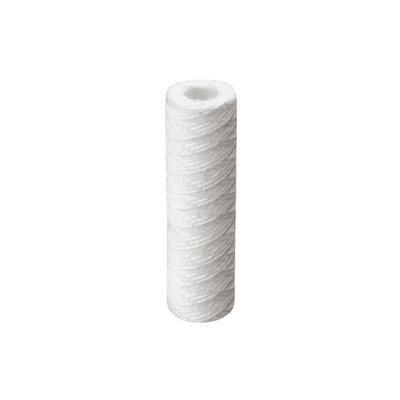
 10" Wound Wire Cartridge 20 micron – code: 10MP20 – Idromar
 Brush with spring - code: SGM45 - Gianneschi Pumps and Blowers
 Stainless steel clamps Norma 12–22 mm – code: FAI0012022 – Toscogomma


How to compare technical datasheets without making compatibility mistakes
When comparing different solutions of boat accessories Fiumicino, the technical datasheet is the most important reference. Reading it well means reducing doubts, avoiding superficial interpretations, and immediately understanding if an accessory is really suitable for your boat.
A practical method is to follow this order:
- identify the precise function of the component to be replaced or integrated;
- collect the measurements and information of the piece currently installed;
- compare mounts, dimensions, and materials;
- verify the indicated usage context;
- check if additional elements or special configurations are required.
If a datasheet does not clarify a decisive detail, it is not advisable to proceed based on assumptions. In these cases, the correct formula is simple: check the product sheet and compare every data point with the actual situation on board. This is the step that distinguishes a quick choice from a correct choice.
For those who want more structured support in selection, consult content related to nautical technical guides helps to better interpret differences, limits, and compatibility between similar components.
Choose the right category for Fiumicino boat accessories
If you are looking for a solution truly consistent with your boat, the most effective way is to start from the correct category and filter options based on real compatibility. Explore the sections dedicated to nautical accessories and available brands, carefully compare the datasheets, and identify the component best suited to your mounting context: a well-made technical choice today avoids errors, adaptations, and unnecessary replacements tomorrow.
FAQ
How to check the compatibility of a boat accessory before purchase?
The most useful control starts from three elements: real measurements taken on board, type of attack, and installation context. Compare this data with the component's technical sheet and also check materials, dimensions, and mounting orientation. If a detail is not clear, check the product sheet.
Are visually similar boat accessories always interchangeable?
No. In the nautical field, external similarity does not guarantee interchangeability. Center distances, fastening systems, depth, materials, or usage configuration may differ. For this reason, it is always better to compare technical data and not rely solely on images.
Which errors most often cause onboard assembly problems?
The most common mistakes are approximate measurements, failure to verify available space, choice made only based on the component's appearance, and failure to check compatibility with other elements already present on the boat.
When is it advisable to consult nautical technical guides to choose an accessory?
Nautical technical guides are particularly useful when you need to replace an installed component, integrate an accessory into an existing system, or compare multiple similar solutions with subtle differences. They help to better read datasheets, measurements, and compatibility.
What to check if the boat has been modified over time?
If the boat has undergone modifications, it is important not to rely only on the original configuration. Check the mounting point directly, photograph the area, take updated measurements, and verify how the new accessory integrates with supports, systems, and accessories already present.


