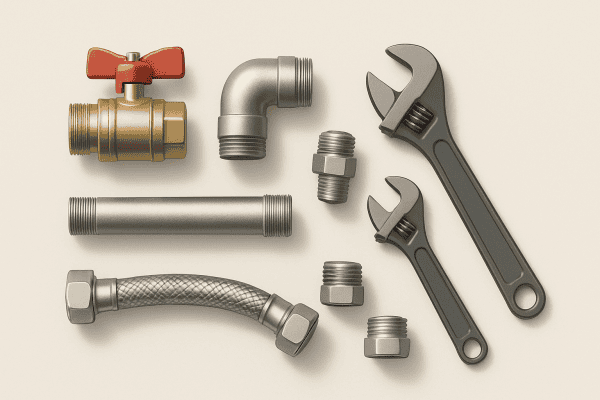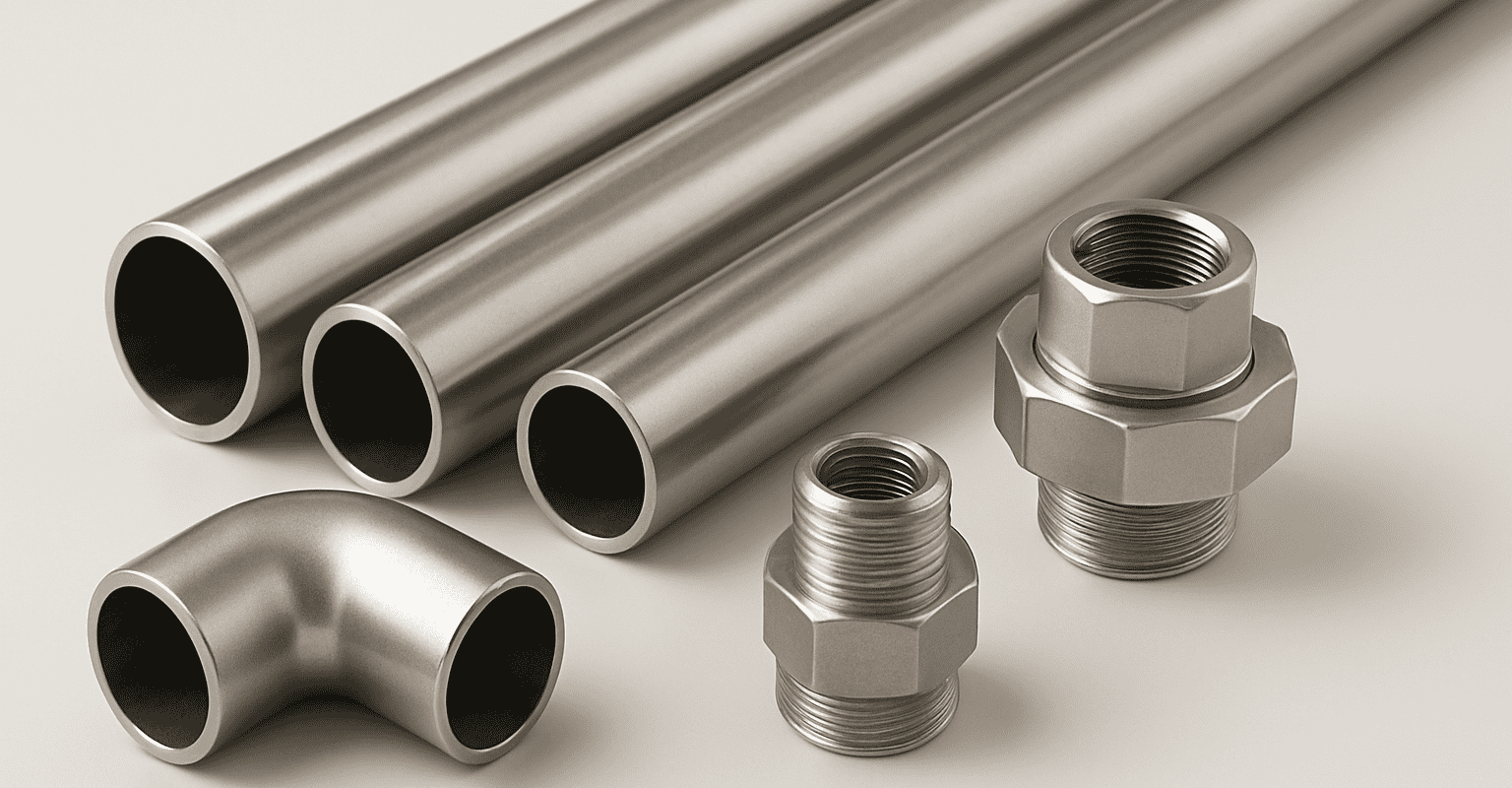
In the comparison between stainless steel pipes aisi 316 prices and alternative solutions, the most common mistake is to stop at the initial cost without evaluating the real usage context. In the field of plumbing and nautical fittings, in fact, convenience depends not only on the material but on how the pipe works inside the system, the type of fluid, the continuity of operation, and the correct interaction with fittings, valves, and accessories.
Those looking for a reliable solution for nautical applications or for lines exposed to aggressive environments often tend to start with a simple question: how much does it cost? The right question, however, is another: which configuration is really convenient based on the system? This is where the topic of AISI 316 stainless steel pipes should be read with a comparative approach, because two apparently similar systems may require very different choices.
To guide you in the selection, it can be useful to also compare connected components such as stainless steel fittings for systems, solutions for nautical hydraulics e accessories for fluid lines, so as to evaluate the system as a whole and not just the pipe.
When to really evaluate stainless steel pipes aisi 316 prices based on the system
Talking about stainless steel pipes aisi 316 prices only makes sense if the comparison starts from the application. In a nautical system, for example, the same material may be suitable in one line and inefficient in another if exposure, installation, or compatibility with other present elements change.
The central point is this: real convenience arises from the balance between expected durability, ease of integration, and consistency with the circuit. If the chosen pipe requires adaptations, non-optimal fittings, or additional checks during installation, the initial advantage can quickly diminish.
It is therefore advisable to consider at least these aspects:
- usage environment, especially if the system operates in the presence of humidity, salt, or agents that can accelerate wear and maintenance;
- type of line, because a rigid section, a secondary branch, or a connection near mechanical components do not pose the same requirements;
- interface with fittings and terminals, a decisive element to avoid unstable couplings or forced assemblies;
- maintenance accessibility, often underestimated in nautical installations where space is limited;
- material continuity in the system, useful to limit problems due to non-ideal combinations between different components.
In practice, those comparing prices should always ask themselves if they are purchasing just a pipe or a solution that fits well into the system. This approach is particularly useful when working with plumbing and nautical fittings, where every installation detail affects the overall performance.
Differences between solutions, sizes and stainless steel pipes aisi 316 prices compatibility
One of the most frequent searches concerns the relationship between stainless steel pipes aisi 316 prices compatibility. It is a decisive topic, because a price perceived as convenient can become secondary if the pipe does not properly interact with the rest of the circuit.
Differences between solutions are not limited to the declared material. Shape, finish, thickness, connection methods and especially compatibility with fittings, bends, branches and fixing points. also come into play. In a marine system, where interventions are often made on existing lines, compatibility must be checked before purchase and not during assembly.
Sizes and dimensions: why they matter more than expected
Sizes should not be read only as geometric data. A pipe may seem correct on paper but prove impractical if the available space requires bends, narrow passages or coupling with already present components. In these cases, it is useful to check in the product sheet:
- diameter and format compatible with the intended fittings;
- type of end or connection;
- intended use suggested by the manufacturer;
- any indications on assembly and recommended combinations.
Those working in marine applications know well that a minimal difference in dimensions can change the installation work. For this reason, the correct comparison is not between one pipe and another in the abstract, but between solutions that can actually be installed in the available space.
Compatibility between materials and circuit components
When talking about stainless steel pipes aisi 316 prices compatibility, the most important point is system coherence. If the pipe is inserted into a line with fittings of different material, unsuitable seals or terminals not perfectly coherent, issues may arise that do not depend on the pipe itself, but on the whole system.
To avoid mistakes, it is useful to think in terms of system:
- check the material of the fittings already present;
- check the type of connection required by the system;
- assess whether the line is new or an integration on an existing circuit;
- consider exposure to marine environment or harsh conditions;
- verify compatibility with supports, clamps, and fastening accessories.
If in doubt, it is advisable to also explore the sections dedicated to stainless steel pipe fittings e components for marine systems, in order to evaluate combinations more precisely.
Mistakes to avoid when choosing or installing stainless steel pipes for marine systems
In the marine sector, many problems arise not from the quality of the material, but from a rushed choice or an installation that is not consistent with the system. Those who compare the stainless steel pipes aisi 316 prices should therefore also consider the most frequent mistakes, because these are precisely what affect the final convenience.
Choosing solely based on initial cost
This is the most common mistake. A seemingly advantageous pipe may require adapters, route modifications, or collateral replacements that increase time and complexity. In a marine system, where accessibility and space are often limited, the real cost of the solution depends greatly on how easily the component integrates.
Neglecting the type of fitting
The fitting is not a secondary detail. A choice not aligned between pipe and connection can generate untidy installations, mechanical stresses, or the need for intermediate components. In the context of plumbing and nautical fittings, this aspect is even more important because vibrations, humidity, and usage cycles put the entire connection to the test.
Not considering the actual route of the line
A linear section in the design can become complex once brought onboard or inserted into a technical compartment. Curves, mandatory passages, and fastening points influence the choice of the most suitable pipe. Before deciding, it is useful to verify if the route requires a rigid solution, a more manageable configuration, or a specific combination with fittings and supports.
Ignoring future maintenance
A solution may seem correct at the time of installation but prove inconvenient in subsequent operations. If the pipe is installed in a hard-to-reach area, even a simple inspection can become complicated. For this reason, convenience should also be considered from a maintenance perspective: how easy is it to intervene on the line without dismantling half the system?
Mixing components without prior verification
Another recurring mistake is combining pipe, fittings, and accessories from different construction logics without checking compatibility. When certain data is missing, the best rule is simple: check the product sheet and always compare coupling characteristics before installation.
Products and categories to consider together with AISI 316 stainless steel pipes
Those who analyze the stainless steel pipes aisi 316 prices with a technical approach know that the pipe alone is not enough. The system's performance depends on all the components working together. For this reason, it is useful to broaden the comparison also to related categories, especially when operating in the world of plumbing and nautical fittings.
The areas to carefully evaluate are:
- compatible fittings, to ensure continuity between the line and connection points;
- junction elements, essential when working on existing systems or route modifications;
- supports and fastening accessories, often decisive for the stability and order of the installation;
- interception or distribution components, if the pipe is part of a more complex line;
- maintenance and replacement accessories, useful when the system must remain easily inspectable.
This method allows for a more realistic assessment of convenience. In many cases, in fact, the best result does not come from choosing the least demanding component at the time of purchase, but from the most coherent combination for the circuit. If you are comparing multiple options, it can be helpful to also explore valves and fittings for systems to understand how to build a homogeneous and easier-to-manage line over time.
Another aspect not to be underestimated concerns replacement on already installed systems. If the new pipe must integrate with existing parts, the evaluation must take into account what remains on board or in the system. In this situation, convenience does not always coincide with the most immediate solution, but with the one that reduces adaptations, critical points, and possible future incompatibilities.
For those working on nautical systems, the advantage of a reasoned choice is clear: less improvisation in assembly, more continuity between components, greater control over the system over time.
Recommended products




How to understand which solution is really convenient in the nautical context
To choose well, it is not enough to compare datasheets in isolation. A practical reading of the system is needed. A useful method consists of starting with three questions:
- where the pipe will be installed and with what space constraints;
- with which fittings it will have to work today and in possible future modifications;
- how important ease of maintenance is compared to the simple initial purchase.
If the answer to these questions is clear, the topic of stainless steel pipes aisi 316 prices becomes more readable. It is no longer about looking for a cost item, but identifying the solution that creates the fewest critical issues throughout the entire life cycle of the system.
In the field of plumbing and nautical fittings, a truly convenient choice is one that reduces uncertainties, simplifies assembly, and maintains coherence among all the components of the line. When you have doubts about measurements, connections, or compatibility, the correct step is always the same: check the product sheet and compare the component with the rest of the system before proceeding.
If you want to navigate among the available solutions, explore the category dedicated to plumbing and marine fittings or consult the reference brand to find compatible components, coordinated fittings, and accessories useful for building a more coherent system from the initial choice.
FAQ
How to evaluate AISI 316 stainless steel pipes prices without stopping at just the cost?
The comparison must be made considering the system as a whole. In addition to the initial cost, compatibility with fittings, ease of assembly, available space, future maintenance, and consistency with existing components also matter.
Is the compatibility of AISI 316 stainless steel pipes with marine fittings always automatic?
No, it should never be taken for granted. It is important to check the type of connection, dimensions, fitting material, and intended use. If any information is unclear, it is advisable to verify it in the product sheet.
In hydraulics and nautical fittings, when is it advisable to choose a solution in AISI 316 stainless steel?
It is advisable when the system requires a solution consistent with the usage environment, circuit components, and durability needs over time. The correct choice always depends on the actual installation context.
What mistakes to avoid when assembling stainless steel pipes in a marine system?
The most common mistakes are choosing based only on price, neglecting the type of fitting, not considering the actual route of the line, and mixing components without prior compatibility verification.
Why is the topic of AISI 316 stainless steel pipe prices compatibility so important?
Why an apparently convenient solution can become ineffective if it requires adaptations or does not integrate well with the rest of the system. Compatibility is one of the factors that determine real convenience.