


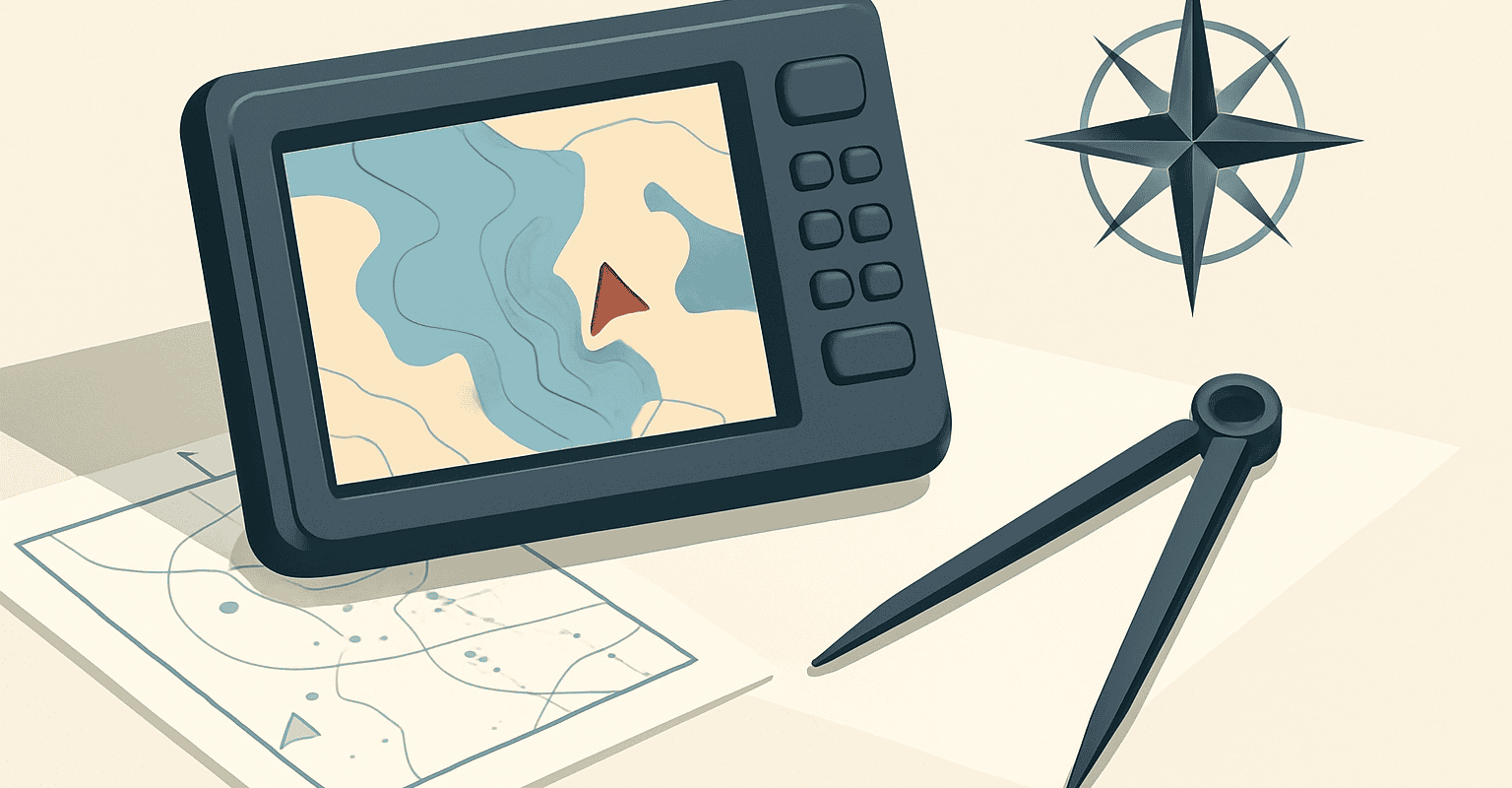
When to really consider nautical GPS prices
Talking about nautical GPS prices usefully means going beyond the superficial comparison between models. In the nautical field, the perceived cost of a device changes based on what it has to do on board, the space available on the console, the type of navigation, and above all its integration with the existing instrumentation. For this reason, an effective technical guide does not start from the price list, but from actual use.
A nautical GPS becomes a central choice when navigation requires clear reading of the charts, intuitive route management and communication with other onboard instruments. If the goal is to replace an outdated device or complete an existing system, it is worth considering compatibility, interface, and installation methods even before comparing market segments.
In many nautical technical guides people tend to simplify the topic, but in reality the value of a GPS does not depend only on the display or declared functions. It also matters how easily it can be read during navigation, how it fits into the console, and its consistency with the rest of the onboard electronics. If you navigate with fishfinders, wind instruments, autopilot, or existing data networks, the correct parameter is not just “how much it costs,” but how well it integrates.
It makes sense to delve into the topic of nautical GPS prices especially in these cases:
- you are setting up a new console and want to avoid inconsistent purchases;
- you need to replace an existing device without redoing the entire system;
- you want to move from a basic solution to a more complete one;
- you have doubts about size, connections, or readability;
- you are looking for a balance between useful functions and ease of use.
Se vuoi inquadrare meglio il contesto dell’elettronica di bordo, può essere utile consultare anche le guide dedicate alla strumentazione nautica e gli approfondimenti sui sistemi di navigazione, così da confrontare il GPS con gli altri elementi del setup.
Differences between solutions, measurements, and nautical GPS price compatibility
The most underestimated point when analyzing nautical GPS price compatibility is that two apparently similar solutions can have very different impacts on the onboard system. The difference concerns not only perceived quality but also the type of installation required, the position on the console, communication with other instruments, and ease of use at sea.
Display size and actual space on the console
The size of the display is one of the first elements that guide the choice, but it must be read in a practical way. A more compact display can be ideal when space is limited or when you want to keep a clean dashboard. A larger solution, on the other hand, can be more convenient for consulting maps and data immediately, especially if the GPS is the operational center of navigation.
The correct evaluation is not “big or small,” but:
- how much useful space you really have on the dashboard;
- from what distance you will read the screen;
- if the device will be used alone or together with other displays;
- if the installation is flush-mounted or on a bracket;
- if the console allows for neat and accessible wiring.
Before choosing, check the product sheet dimensions, mounting methods, and installation requirements. An unsuitable size can force avoidable modifications or compromise the ergonomics of the control station.
Compatibility with the onboard network
When talking about nautical GPS price compatibility, the real issue is understanding if the device can work coherently with the electronics already present. An isolated GPS may be fine in basic configurations, but on many boats the demand is different: data sharing, integrated display, interaction with sensors or other instruments.
The right questions to ask are:
- does the GPS need to communicate with instruments already installed?
- is it necessary to display data from multiple sources?
- was the current system designed to be expandable?
- do you want a simple solution today but open to future upgrades?
At this stage, the nautical technical guides help avoid a choice based solely on aesthetics or cost. A device compatible with your onboard ecosystem can greatly simplify the user experience, while a non-aligned solution risks creating operational limits or indirect adaptation costs.
Interface, mapping, and usage logic
Another element that affects the perception of nautical GPS prices is the ease of use. In navigation, a clear interface often matters more than a long list of functions. Intuitive menus, quick access to main screens, and good map readability can make a difference daily.
Not all users have the same needs. Those looking for a direct and immediate system may prefer an essential but well-organized solution. Those who use the GPS as the navigation hub might prioritize screen customization, management of multiple data, and integration with other devices. Even in this case, the correct comparison is functional: not which device offers the most overall, but which offers what is really needed onboard.
Per approfondire come orientarsi tra display, sensori e integrazione, possono essere utili le guide sulla scelta degli strumenti di plancia e gli articoli tecnici sull’integrazione dell’elettronica nautica.
Mistakes to avoid when choosing or installing the marine GPS
Many problems arise not from the product itself, but from an incomplete evaluation before purchase. Those seeking information on nautical GPS prices often compare only the visual aspect or the level of equipment, neglecting elements that have a much greater impact on the real experience.
Choosing based on perceived price and not on use
The first mistake is to consider the GPS as a standard accessory. In reality, it changes a lot depending on whether the device is used for short trips, regular coastal navigation, or more complex route management. An oversized device may be underutilized; a too basic one can become limiting after a short time.
To avoid this mistake, first define:
- how you usually navigate;
- which data you consult most often;
- which instruments you want to have under control from the helm;
- if you foresee future system expansions.
Ignoring installation dimensions and reading position
Another common mistake concerns installation. Considering only the display diagonal without taking into account total size, bezel, rear space, and connection accessibility can lead to an impractical choice. The mounting point also matters: a GPS that is clearly visible but hard to reach offers no real advantage.
Before proceeding, check the product sheet all information related to installation, dimensions, and preparation. If the helm is already occupied by other instruments, it is better to plan the whole setup rather than the single element.
Neglecting compatibility with existing instruments
Among the most costly mistakes in terms of time and adjustments is underestimating compatibility. If sensors, transducers, displays, or autopilot systems are already on board, the GPS must be evaluated as part of an ecosystem. A choice made without this check can reduce available functions or make daily use less smooth.
Here the correct logic is simple: first check compatibility, then compare solutions. If a technical detail is unclear, check the product sheet or compare the information with the existing system documentation.
Underestimating the user experience in real conditions
In store or online, many solutions may seem equivalent. On the boat, however, priorities change: reflections, vibrations, speed of consultation, menu simplicity, and command immediacy become central. A complex or hard-to-read interface can slow operations precisely when speed is needed.
The best nautical technical guides insist on this point: the GPS must be chosen thinking about how it will really be used, not just how it appears in a comparison chart.
Products and categories to consider for a more complete choice
When analyzing the nautical GPS prices, it is useful to broaden the view to related categories as well. A GPS rarely works alone in a well-designed setup: it is often part of a system where every element contributes to navigation quality and dashboard practicality.
The categories to consider, from a technical perspective, are those that can influence installation, data reading, and expansion possibilities. This does not mean buying everything together, but understanding how the GPS fits into the overall boat project.
- Displays and dashboard instrumentation, to coordinate space, visibility, and access to information;
- data network components and connections, if the goal is to integrate multiple devices;
- mounting supports and accessories, when the GPS position is crucial for ergonomics and operational safety;
- complementary instruments, if you want a more complete reading of navigation data;
- upgradable solutions, if you plan to expand the system at a later stage.
This overview also helps to better understand the differences between various nautical GPS prices and compatibility. An apparently simple solution can be perfect in an essential dashboard; a more complex system only makes sense if the rest of the setup is consistent. The correct criterion, therefore, is not to chase the most complete solution overall, but the one best suited to your configuration.
Se stai costruendo un quadro più ampio per la tua imbarcazione, puoi consultare anche gli approfondimenti sulle categorie di elettronica nautica e le risorse tecniche per la scelta degli accessori di installazione.
A good operating method is this:
- define the role of the GPS in your navigation;
- measure the available space precisely;
- check compatibility with the existing system;
- evaluate the simplicity of the interface based on your use;
- consider any future expansions before the final choice.
Following this scheme, the topic of nautical GPS prices stops being a generic comparison and becomes a more reliable technical evaluation. This is precisely the approach that makes the nautical technical guides: help to choose wisely, not just to compare datasheets.
Recommended products

 10" Wound Wire Cartridge 20 micron – code: 10MP20 – Idromar
 Brush with spring - code: SGM45 - Gianneschi Pumps and Blowers
 Stainless steel clamps Norma 12–22 mm – code: FAI0012022 – Toscogomma



How to navigate between technical comparison and final choice
In the comparison between different solutions, the most useful question is not which GPS seems more complete, but which best meets the needs of your helm and your system. Differences in measurement, integration, and usage logic often matter more than you might think. For this reason, when looking for information on nautical GPS prices, it is advisable to read the economic data together with compatibility, installation, and operational simplicity.
If you want to move from theory to practical choice, explore the selection of tools and brands available in the catalog: you can compare solutions based on installation, integration, and real use, finding the option best suited to your onboard configuration.
FAQ
How to properly evaluate nautical GPS prices without stopping at just the cost?
The comparison must be made considering real use, dashboard space, ease of reading, mounting methods, and integration with existing instrumentation. A GPS may seem similar to another, but ergonomics and compatibility vary greatly.
How important is compatibility when choosing a marine GPS?
It matters a lot, especially if other instruments are already on board. Before purchasing, it is useful to check if the device can communicate with the existing system and if it supports any future expansions. If you have doubts, check the product sheet.
Better a more compact display or a larger one?
It depends on the available space, the reading distance, and the role of the GPS in navigation. A compact display can be ideal in essential dashboards, while a larger solution may be more comfortable if the GPS is the center of route management and cartography.
What mistakes to avoid when installing a marine GPS?
The most common mistakes are ignoring the actual dimensions, not considering space for wiring, choosing a position that is not ergonomic, and neglecting compatibility with other tools. Before assembly, it is advisable to check measurements and requirements in the product sheet.
Why are nautical technical guides useful in making a choice?
Because they help to read the GPS as part of a system and not as an isolated element. A good technical guide clarifies differences between measurements, usage, compatibility, and installation logic, making the comparison more concrete and less superficial.


