


When boat awnings and accessories are really needed
Talking about boat awnings and accessories usefully means starting from a point often underestimated: there is no one-size-fits-all solution for every boat just because it “seems compatible.” The correct choice always depends on how the onboard system is configured, where you want to create shade or protection, and how the space is used during navigation or at rest.
On many boats, the awning is not an isolated element but part of a set that includes supports, fastenings, joints, attachments, support structures, and anchor points. For this reason, in the nautical technical guides, the first criterion is not aesthetics but the relationship between the cover and the existing system.
In practice, the boat awnings and accessories become really necessary when you need to solve one of these needs:
- protect a specific area without interfering with passages, seats, or maneuvers;
- integrate a cover with supports already present on board;
- restore a worn system while maintaining the same mounting logic;
- improve the usability of the cockpit or other exposed areas;
- adapt the structure to a different setup than the original one.
The key point is to understand whether you need to replace only a component, update the fastening system, or rethink the whole. This distinction avoids common mistakes: buying a correct accessory in itself but unsuitable for the mounting points or the boat’s geometry.
Se stai confrontando soluzioni per l’allestimento di copertura, può essere utile approfondire anche altre guide tecniche nautiche dedicate ai componenti di bordo e alle logiche di installazione.
Boat awnings and accessories compatibility: what to check before choosing
The theme of boat awnings and accessories compatibility is what most often makes the difference between a useful purchase and a component that causes problems during installation. Compatibility is not only about “if it fits” or “if it mounts,” but the relationship between structure, attachments, dimensions, and real function.
Existing fastening points
The first check should be on the available fastening points. Some boats have obvious predispositions, others require a more careful check of surfaces, support orientation, and the stability of the area where the accessories will be installed.
Before choosing, it is advisable to verify:
- if the existing anchor points are reusable;
- if the current position allows a functional opening of the awning;
- if the working angle of the supports is consistent with the structure you want to mount;
- if there are obstacles such as tientibene, windshields, cushions, roll bars, or other already installed elements.
If this aspect is not clear, check the product sheet what indications are available on attachments, brackets, and installation methods.
Geometry of the area to be covered
Another common mistake is to think only about the nominal measurement without considering the actual shape of the area. Two boats with apparently similar spaces may require different configurations due to different heights, inclinations, side passages, or openings of lockers and seats.
For this reason, the most successful choices always consider:
- effective useful width and not just the perceived one;
- available height when open and closed;
- interference with already mounted accessories;
- need for free access to consoles, ladders, or technical compartments.
Those looking for boat awnings and accessories compatibility often discovers that the real issue is not the awning itself, but how it integrates with the existing structure.
Materials and system logic
Not all accessories work well in the same context. If the onboard system is already set up with a certain type of supports or with a structure that follows a precise logic, it is advisable to maintain consistency also in the choice of additional components. Mixing different elements without prior verification can cause play, misalignments, or uncomfortable use over time.
When analyzing a solution, always ask yourself:
- does the accessory complete the system or force it?
- does the structure open and close without friction or critical points?
- do the supports work in the position for which they are designed?
- does the whole remain practical even in daily use?
Per orientarti meglio tra componenti, attacchi e accessori correlati, può essere utile consultare una panoramica sui componenti per coperture nautiche e confrontarla con l’impianto già presente a bordo.
Differences between solutions, measurements or compatibility
When comparing alternatives, the point is not to understand which solution is “absolutely better,” but which is really convenient based on the system. This is where a technical approach surpasses superficial comparison between shapes or sizes.
The most important differences generally concern three levels: structure, fastening methods, and adaptability to real use.
Solutions designed for quick integration
Some systems are suitable when the boat already has a coherent base: existing attachments, free spaces, and favorable geometry. In these cases, the choice can focus on the compatibility of individual accessories and the practicality of opening, closing, and storage.
This route is often the most sensible when:
- you want to replace worn parts without modifying the system;
- the existing configuration is valid and only needs to be completed;
- a linear solution is needed, without changing the assembly logic.
Solutions that require a complete system check
In other cases, compatibility must be considered more broadly. If the anchor points are not optimal, if the cover must coexist with other edge elements, or if the space is irregular, it is not enough to compare a single measurement. It is necessary to understand if the entire system can work correctly.
This check is crucial especially when:
- the boat has undergone modifications over time;
- additional accessories have been added later;
- the area to be covered is not linear or has passage constraints;
- you want to improve usability, not just add shade.
Nominal measurements and useful measurements do not always match
One of the most delicate points in nautical technical guides concerns the difference between the declared data and the space actually usable. A measurement may seem correct on paper but prove impractical once installed. For this reason, it is always advisable to consider the useful measurement in the real context of the boat.
For example, a cover may theoretically be suitable but:
- open poorly due to the inclination of the supports;
- limit passage in an operational area;
- interfere with other elements during use;
- require additional accessories to achieve consistent stability.
Se stai confrontando più opzioni, può aiutarti leggere anche contenuti dedicati a supporti e fissaggi per barca, così da valutare la soluzione non solo per dimensione ma per integrazione reale.
Mistakes to avoid in choice or assembly
Many problems arise even before installation. The typical mistake is not buying a low-quality component, but choosing without having correctly read the onboard system. In an article oriented to nautical technical guides, this is the most important step: avoiding simplifications.
Choosing based solely on visual shape
A solution may look perfect in photos or on another boat, but not be suitable for your setup. The arrangement of consoles, seats, handrails, side accessories, and angles varies greatly from boat to boat. Copying a configuration without verification often leads to impractical installations.
Ignoring clearance when opening and closing
An accessory should not be evaluated only when mounted. It must be imagined in all its usage phases: opening, closing, resting, possible disassembly, and storage. If this step is skipped, the risk is ending up with a solution that hinders movement on board or requires awkward maneuvers.
Neglecting consistency between accessories
When only part of the system is replaced, it is necessary to check that the new component works well with the existing ones. A minimal difference in the type of attachment, support geometry, or orientation can create practical incompatibilities. In these cases, the key word is always system consistency.
Mounting without preliminary surface inspection
Another common mistake is considering the installation surface secondary. In reality, the position, accessibility, and shape of the area directly affect the success of the installation. If you are not sure about the match between the accessory and the fixing point, check the product sheet and compare the information with the actual structure of the boat.
Per chi vuole ridurre gli errori più comuni, può essere utile consultare anche una raccolta di accessori di montaggio nautico e leggere le indicazioni tecniche collegate ai diversi sistemi di installazione.
Products and categories to consider
When evaluating a complete solution, it is useful to think in terms of functional families rather than isolated single pieces. This approach helps to understand what is really convenient based on the existing system and to avoid disconnected purchases.
The categories to consider, from a technical perspective, are generally these:
- cover structures, when it is necessary to create or restore the main function;
- fastening accessories, if the key point is anchoring to the boat;
- joints and supports, when the critical issue concerns movement, orientation, or stability;
- connection components, utili per integrare parti diverse in un unico sistema coerente;
- useful for integrating different parts into a single coherent system;, spare parts and complementary components.
, if the system is valid but only requires targeted updating.
This method is particularly useful in competitor-driven contexts, where many solutions are presented as universal. In reality, what is truly convenient only emerges when categories are compared with one’s own system: structure, mounting points, available space, and usage modes. boat awnings and accessories, If your goal is to choose more consciously between.
Può essere utile approfondire anche le sezioni dedicate a ricambi e accessori per la coperta, soprattutto se stai cercando di integrare un sistema già installato senza stravolgerne l’assetto.
Recommended products

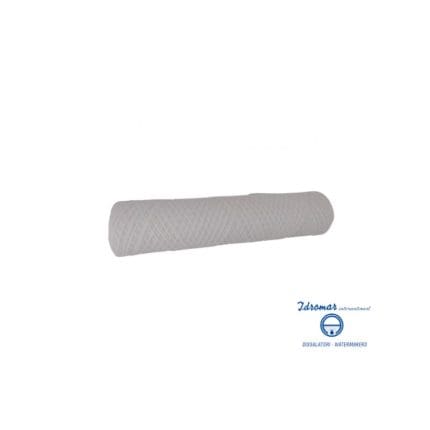 10" Wound Wire Cartridge 20 micron – code: 10MP20 – Idromar
 Stainless steel clamps Norma 12–22 mm – code: FAI0012022 – Toscogomma
 Brush with spring - code: SGM45 - Gianneschi Pumps and Blowers


How to understand which solution is really convenient based on the system
The most useful question is not “which is the best awning?”, but “what is the most suitable solution for my boat as it is today?”. This change of perspective is fundamental. A pre-installed system can make a simple and immediate choice convenient; a more complex configuration may instead require a set of coordinated accessories or a review of the mounting points.
To arrive at a sensible decision, it is advisable to follow this sequence:
- observe the existing system and identify the actual mounting points;
- define the area to be covered and how you use it on board;
- check for any interference with other existing elements;
- assess whether you need a replacement, an integration, or a reconfiguration;
- always compare the declared compatibility with the actual geometry of the boat.
This logic allows you to correctly understand the topic boat awnings and accessories compatibility and to avoid choices guided only by images, habits, or overly generic comparisons with other boat models.
If you want to navigate between technical solutions, coordinated accessories, and components designed to integrate with various onboard systems, explore the dedicated category or the reference brand: it is the fastest way to compare consistent options and check in the product sheet which configuration can best fit your boat.
FAQ
How to check compatibility between boat awnings and accessories and the existing system?
Compatibility must be checked starting from the available mounting points, the geometry of the area to be covered, and any obstructions present on board. It is not enough to compare a measurement: it is important to also verify the orientation of the supports, opening space, and consistency with already installed accessories. If a detail is unclear, check the product sheet.
When is it advisable to replace only the accessories and not the entire awning system?
It is advisable to intervene only on the accessories when the overall structure is still consistent with the boat's layout and the problem concerns fastenings, supports, joints, or worn components. If, on the other hand, the mounting points are not suitable or the use of space has changed, it may be more sensible to review the whole.
Are the awning measurements enough to choose the right solution?
No. The measurements are only part of the evaluation. You also need to consider usable height, support inclination, interference with other edge elements, and ease of use. A solution that seems correct on paper may turn out to be impractical once installed.
What is the most common mistake when choosing boat awnings and accessories?
The most common mistake is choosing based on appearance or a configuration seen on another boat, without reading the actual system of your own boat. Each setup has specific constraints: anchor points, passages, already present accessories, and different geometries require technical checks before purchase.


