


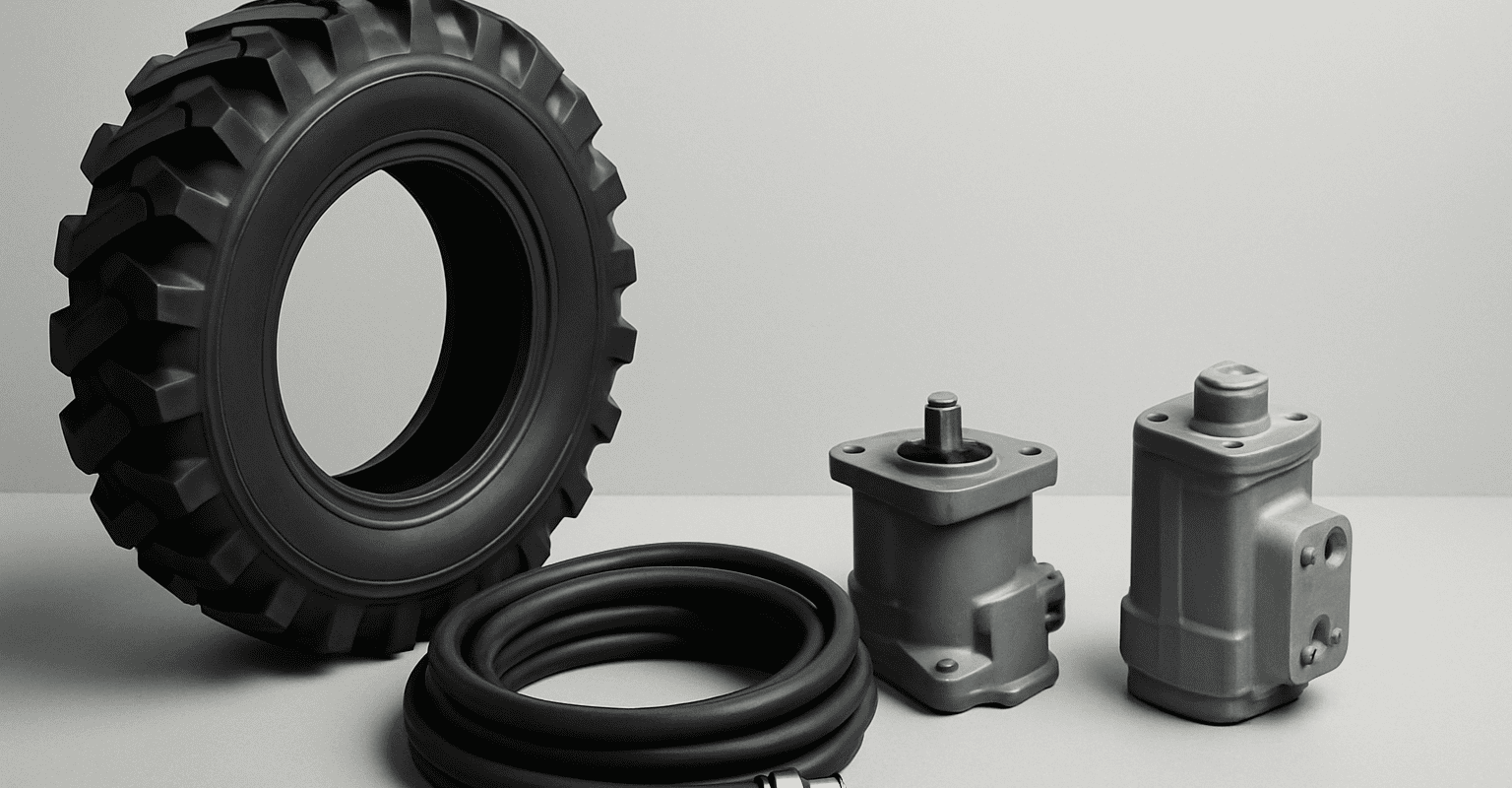
When looking for a reliable supplier for hoses, fittings, technical components and spare parts, the name TOSCOGOMMA 2.0 DEI F.LLI FIORINI SNC often comes among the first options to consider. In an operational context where applications, materials and conditions of use change, choosing between entry-level, professional and heavy-duty solutions does not only mean comparing similar items, but understanding which product level is more consistent with the actual use.
This guide is created with a practical and purchase-oriented approach: it helps to read the catalog more consciously, reduce errors during ordering and set a more precise selection of spare parts. If you are looking for a toscogomma 2.0 dei f.lli fiorini snc guide useful tool to guide you through applications, compatibility and maintenance, here you will find the essential criteria to consider before proceeding.
For an overview of the brand and updated availability in the store you can consult TOSCOGOMMA 2.0 DEI F.LLI FIORINI SNC, while to deepen the logic of choice between related components it can also be useful to explore brand and spare parts e technical guides for industrial supplies.
What is TOSCOGOMMA 2.0 OF THE F.LLI FIORINI SNC for
TOSCOGOMMA 2.0 DEI F.LLI FIORINI SNC it is an interesting reference for those who have to manage technical supplies related to fluid handling, interconnection between components and replacement of wear parts. In practice, the brand can be considered when a solution is needed to:
- restore a system with a compatible spare part;
- set up a line with consistent components;
- improve reliability compared to a too basic solution;
- choose materials and configurations more suitable for continuous use;
- manage more demanding work environments with heavy-duty components.
The distinction between entry-level, professional and heavy-duty is especially useful during selection. An entry-level solution can be adequate in simple, occasional or low-stress applications. A professional solution is generally more suitable when use is regular and greater operational continuity is required. Heavy-duty options, on the other hand, make sense when the work environment, frequency of use or operating conditions require a more robust choice.
The key point is to avoid a generic approach. It is not enough to identify a product family: it is necessary to verify intended use, fluid compatibility, type of connection, dimensions and operating conditions. If your goal is to purchase with less margin of error, it is always better to start from the actual application and not just the visual similarity of the component.
For those managing maintenance, workshop, plant engineering or spare parts procurement, the brand can also represent a useful choice in terms of continuity: working with a recognizable supplier helps simplify reordering and build a more organized reference base over time. In this sense, also consult spare parts and components for systems can help link the individual item to the system in which it will be installed.
Compatibility, measurements, and technical checks
One of the most delicate aspects in choosing components and spare parts is actual compatibility. Many errors arise from the fact that two items seem equivalent, but differ in details that directly affect assembly or operational lifespan.
When evaluating a brand solution, always check at least these points:
- connection dimensions, internal and external, where relevant;
- type of attachment and fitting geometry;
- material of the component and compatibility with the fluid;
- operating range and available installation space;
- operating context, for example occasional, continuous or heavy use;
- any necessary accessories for correct assembly.
A common mistake is focusing only on the nominal size. In reality, size alone is not enough: the type of terminal, connection configuration, and material can also change the final result. If a detail is unclear, check the product sheet or compare the component to be replaced with available photos, dimensions, and descriptions.
How to distinguish an entry-level choice from a professional one
The difference is not only about the “level” of the product, but the consistency with the work to be done. In a simple line or non-intensive use, an entry-level solution may be sufficient. However, if the component works more frequently, is often disassembled and reassembled, or is part of a system where downtime is costly, it is wiser to opt for a professional range.
Heavy duty solutions become relevant when the application requires greater wear resistance, better long-term stability, or a structure more suited to demanding environments. It is not an absolute rule: the correct choice always depends on actual use. For this reason, a good toscogomma 2.0 dei f.lli fiorini snc guide must start with a simple question: where and how will the component be installed?
Checks to make before confirming the order
Before purchasing, it is useful to set up a mini internal checklist. A few steps are enough to significantly reduce errors:
- compare the old component with the new one on shape, connection and dimensions;
- check if needed gaskets, clamps, adapters or complementary fittings;
- check if the component operates in a point subject to vibrations, bends or mechanical stress;
- make sure the material is suitable for the fluid or the operating environment;
- if the catalog presents variants, read the description carefully and check the product sheet.
This phase is particularly important also for those who deal with toscogomma 2.0 dei f.lli fiorini snc maintenance, because a replacement carried out with a component only apparently compatible can cause time loss, new disassemblies and corrective procurements.
Typical errors in ordering or installation
In the technical spare parts sector, the most costly mistakes are not always the obvious ones. They often arise from a hasty evaluation or from an order placed based on an incomplete code. Knowing the most common mistakes helps to prevent them.
Confusing aesthetic similarity with real compatibility
Two components may look identical and not be at all. A difference in the connection, material or terminal configuration is enough to compromise the assembly. For this reason, it is always advisable not to rely only on the photo, but to cross-check description, measurements and intended use.
Neglecting the usage context
Another typical mistake is buying a spare part that is correct “in theory”, but not suitable for the level of use. An entry-level component placed in a heavy-duty context may require more frequent replacements; conversely, a heavy-duty solution in a very simple use could be oversized compared to the need. The best choice is the proportional one.
Forgetting the complementary accessories
Many orders get stuck because a secondary but essential element is missing. Gaskets, fastening systems, adapters or complementary fittings can make the difference between an immediate assembly and an unexpected stop. When selecting an item, always ask yourself if the component is really ready for installation or if it requires additional parts.
Assembling without preliminary check
Even a correct item can be installed in a non-optimal way. Before assembly, check surface cleanliness, alignment, absence of abnormal tensions and correct positioning of connection elements. A forced or misaligned installation accelerates wear and makes the replacement intervention less effective.
If you want to make the purchasing process more orderly, it can be useful to also consult tools for spare parts selection e industrial maintenance support, so as to link the component to the plant logic and not only to the single order.
Useful products, spare parts, and accessories
When evaluating the catalog of a brand like TOSCOGOMMA 2.0 DEI F.LLI FIORINI SNC, it is advisable to think in terms of usage ecosystem. In other words, do not just look at the part to be replaced, but at the set of elements that ensure its proper functioning. This approach is useful both for those who purchase a single spare part and for those who need to plan a larger supply.
The categories that generally deserve attention are:
- main components for connection and fluid passage;
- spare parts subject to wear or periodic replacement;
- mounting and completion accessories;
- connection elements compatible with the existing configuration;
- parts useful to simplify maintenance, replacement, and reordering.
The choice between entry-level, professional, and heavy-duty solutions is also central here. If the goal is the quick restoration of a simple application, an essential configuration may be sufficient. However, if the component is part of an important operational line, it is advisable to consider a more structured solution, with greater attention to continuity, ease of maintenance, and long-term reliability.
A useful criterion is to already think about the next cycle: how easy will it be to obtain the spare part again? How simple will it be to identify the correct variant? Are there accessories or complementary components worth ordering together? This approach reduces downtime and makes technical warehouse management more efficient.
In daily work, good spare parts organization also involves clear internal nomenclature, photos of installed components, and an orderly collection of product sheets. In this sense, the toscogomma 2.0 dei f.lli fiorini snc maintenance does not only concern the physical replacement of the part but also the method by which the company manages identification, procurement, and verification.
If you are building a coherent selection for your plant or department, the advice is to start from the brand and then filter based on the application, always maintaining careful control over measurements, connections, and necessary accessories.
How to set a safer choice in the store
In a technical store, speed is useful, but accuracy is even more so. To choose well among the brand's proposals, try to follow a simple path:
- Identify the application: replacement, new installation, integration, or upgrade.
- Define the level of use: entry-level, professional, or heavy-duty based on the real context.
- Gather data of the existing component: measurements, shape, attachments, material, any photos.
- Check the product sheet: if a detail is uncertain, verify it in the product sheet.
- Evaluate complementary items: accessories, fittings, fastening elements or related spare parts.
- Think about future maintenance: ease of reordering, identification and replacement.
This logic is particularly useful for buyers, maintenance personnel, installers and warehouse managers, as it helps avoid purchases based solely on urgency. A well-made selection today also makes reordering easier tomorrow.
If you want to learn more about the brand and check availability in the store, visit the dedicated page at TOSCOGOMMA 2.0 DEI F.LLI FIORINI SNC: it is the most practical starting point to guide you through brands, spare parts and solutions suitable for your operational context.
FAQ
How to choose between an entry-level, professional, and heavy-duty solution?
The choice depends on the context of use. An entry-level solution may be suitable for simple or occasional tasks, a professional one is more appropriate for regular use, while a heavy-duty one is recommended for more demanding conditions. Before purchasing, consider the application, frequency of use, material, attachments, and overall compatibility.
What checks to perform before ordering a TOSCOGOMMA 2.0 SPARE PART FROM F.LLI FIORINI SNC?
It is advisable to check measurements, type of connection, material, shape of the component, and accessories needed for assembly. If any information is unclear, check the product sheet and always compare the replacement with the component already installed.
Does the maintenance only require the replacement of the component?
No. A good maintenance activity also includes correct identification of the spare part, verification of compatibility, checking of connected accessories, and organization of future reordering. This reduces errors, downtime, and repeated replacements.
Is it enough to choose a component that looks the same as the one to be replaced?
No, visual similarity does not guarantee compatibility. Even small differences in mount, material, or configuration can affect fitting and use. That is why it is important to always check the available technical details.
Where is it best to start to find products and spare parts of the brand?
The most practical way is to start from the brand page in the store, so you can check updated availability and better navigate among solutions, spare parts, and accessories compatible with your application.


